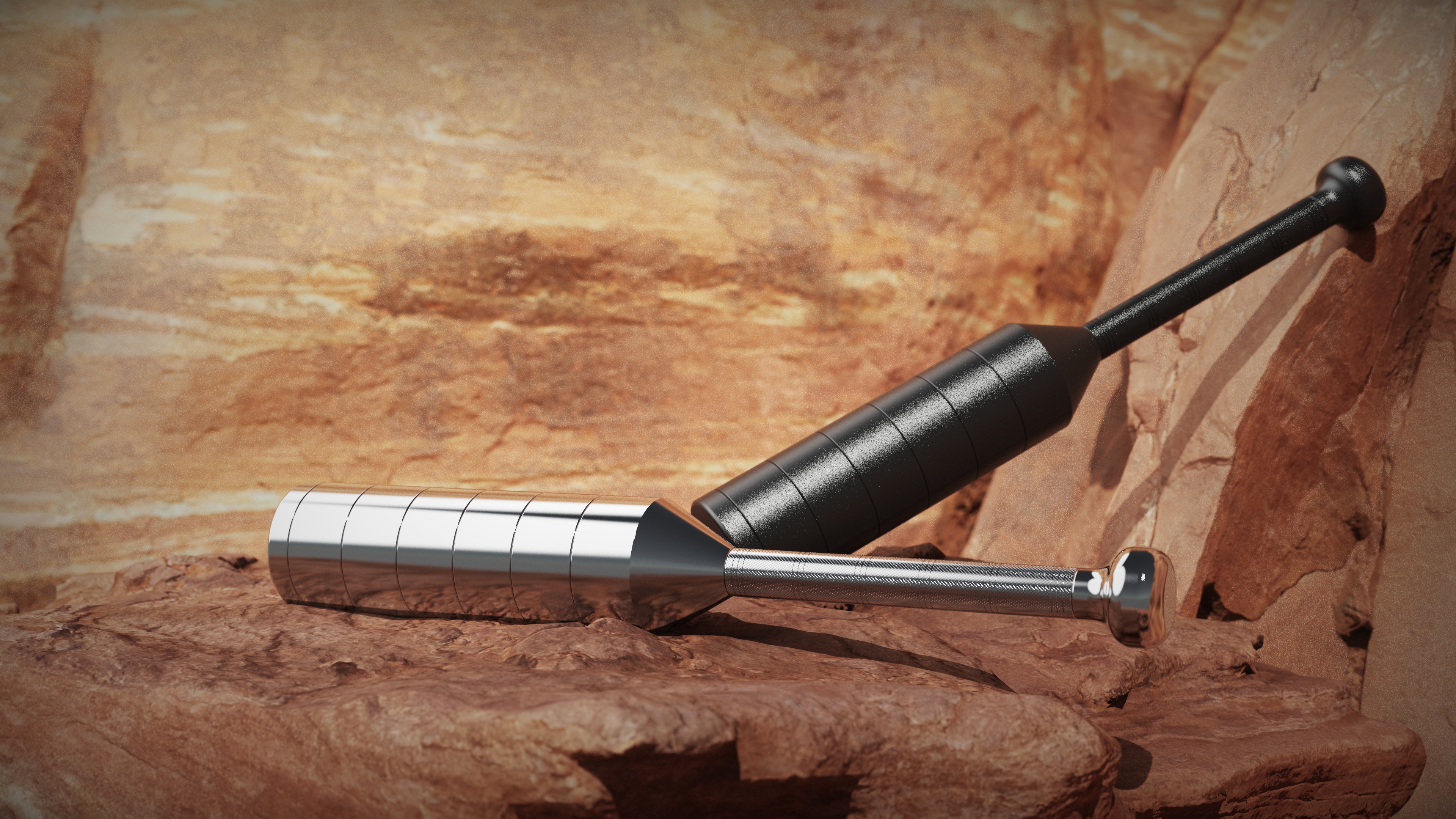
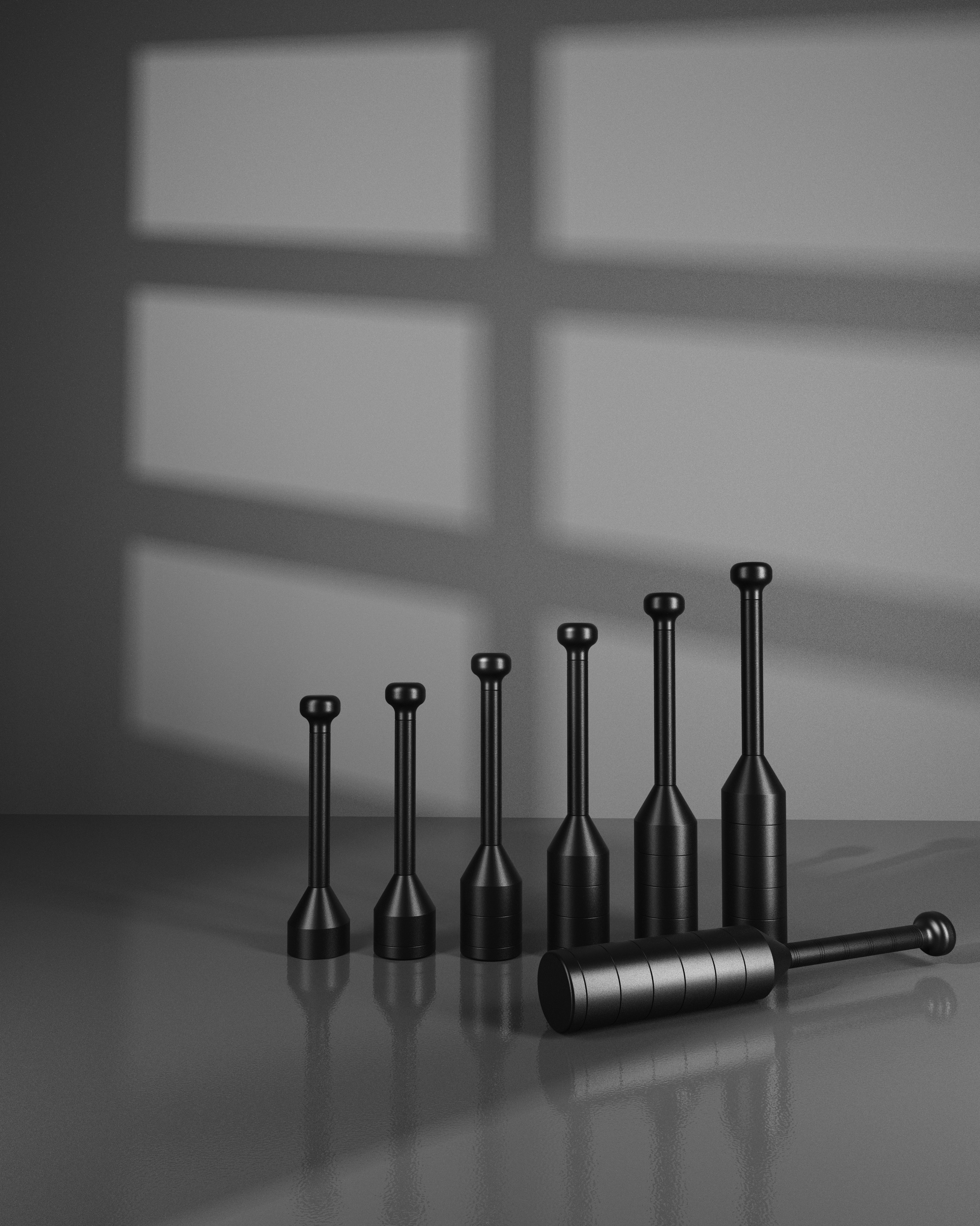
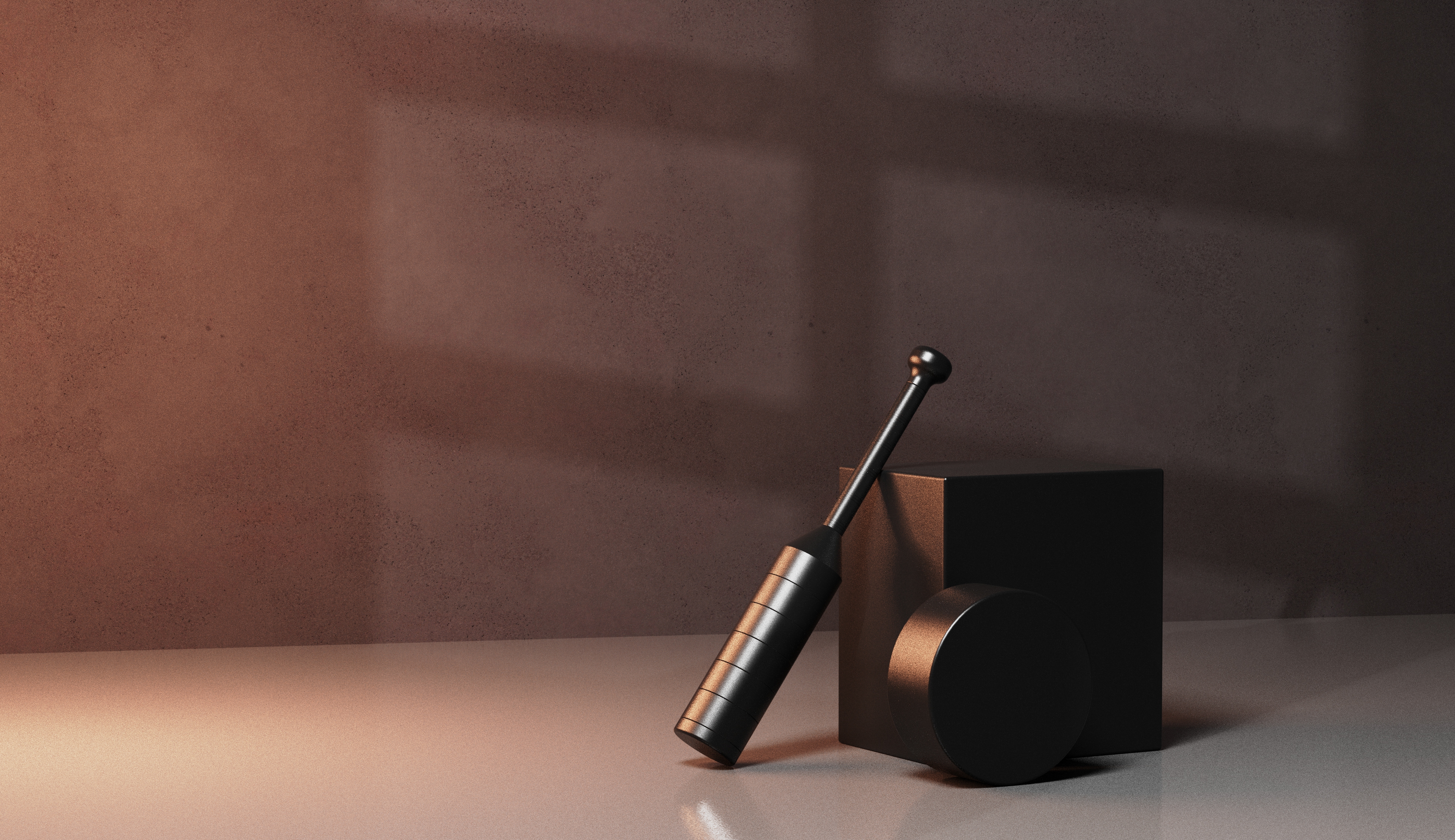
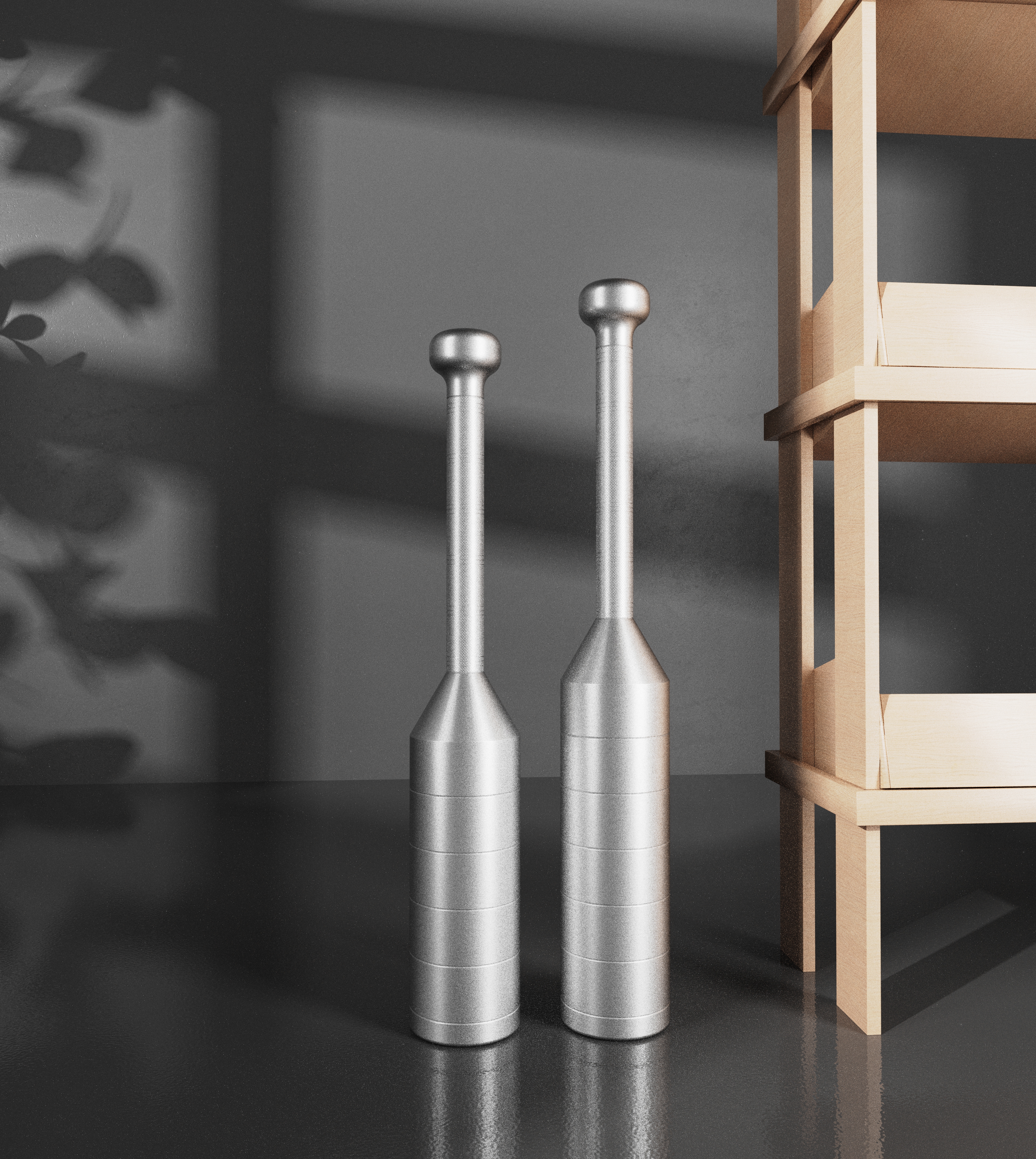
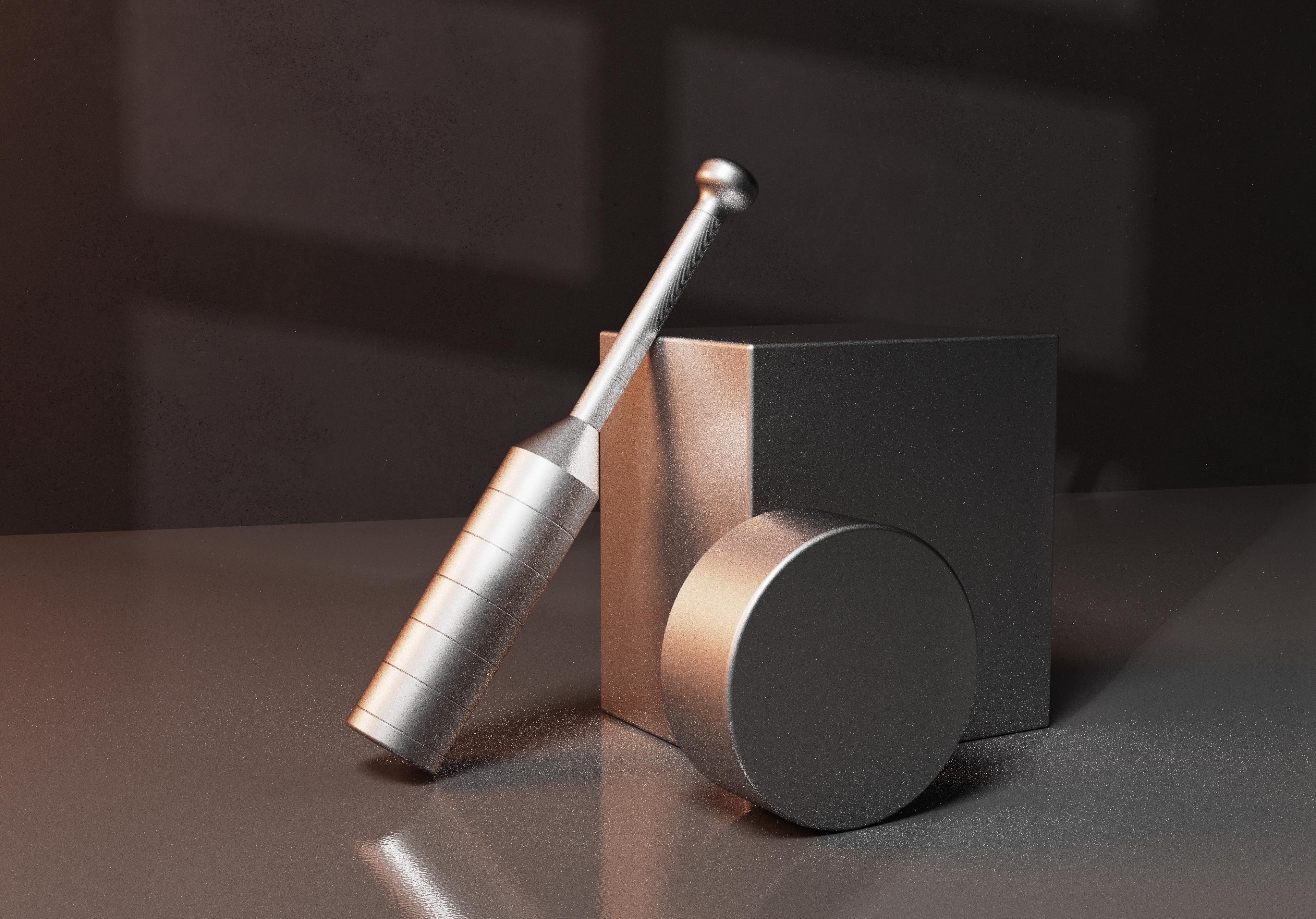
It is a segmented stacked counterweight, each section is a steel counterweight ring, relying on thread locking, belonging to the * * adjustable weight structure * *, a rod bell can switch multiple gears of weight, saving space; The counterweight is fixed by pressing the end face.
The far end of the center of gravity is set back: the weight is concentrated at the end away from the palm, and the torque is created by lever effect, which is completely different from the stress logic of dumbbells and kettlebells. It is suitable for shoulder, wrist, core and scapular stability training, and is suitable for swinging, rotating and circling movements.
The counterweight cylinder is composed of multi-ring blocks, which can increase or decrease the counterweight blocks to meet the different weight requirements of novice → advanced. Taper transition section: a conical narrowing transition is made between the handle and the counterweight cylinder to avoid stress concentration and smooth weight transition without abrupt step.
The spherical limit at the end of the handle prevents the handle from slipping out. It can also be used as an auxiliary holding point to support multiple grip methods such as double-hand grip and hand-changing grip.
The handle area is knurled (pattern anti-skid texture) to improve the friction coefficient and reduce the risk of hand-off after sweating. The diameter of the grip is suitable for one-handed holding, matching the palm of an adult, and is suitable for typical stick-bell movements such as grasping, rotating grip, sliding hand change, etc.
The limit of the end ball is a very critical man-machine detail: even if the hand slides forward when swinging and passing the shoulder, the ball can block the palm of the hand, prevent the bell from flying out directly and improve the safety redundancy; At the same time, the ball can also be used as the second holding point, changing the arm of force and switching the training difficulty.
The core feature of the stick bell is that the center of gravity is away from the hand, enlarging the stable load of the wrist and rotator cuff, and focusing on training the proprioception and stability of the shoulder blade and wrist joint. However, this design also has a price: under the same weight, the pressure of the stick bell on the wrist and shoulder is much greater than that of the dumbbell, which requires high action mode, and is easy to cause shoulder and wrist strain.
Add the weight, the center of gravity will move to the far end, the torque will increase, and the difficulty will increase; reduce the weight, the center of gravity will be close to the hand, and the lever will become smaller, which is more suitable for novices. This adjustable feature allows the same device to be adapted to different strength levels and different rehabilitation/training goals.


The copyright of this work belongs to 小five. No use is allowed without explicit permission from owner.

New user?Create an account
Log In Reset your password.
Account existed?Log In
Read and agree to the User Agreement Terms of Use.
Please enter your email to reset your password

666
Perfect
Too advanced