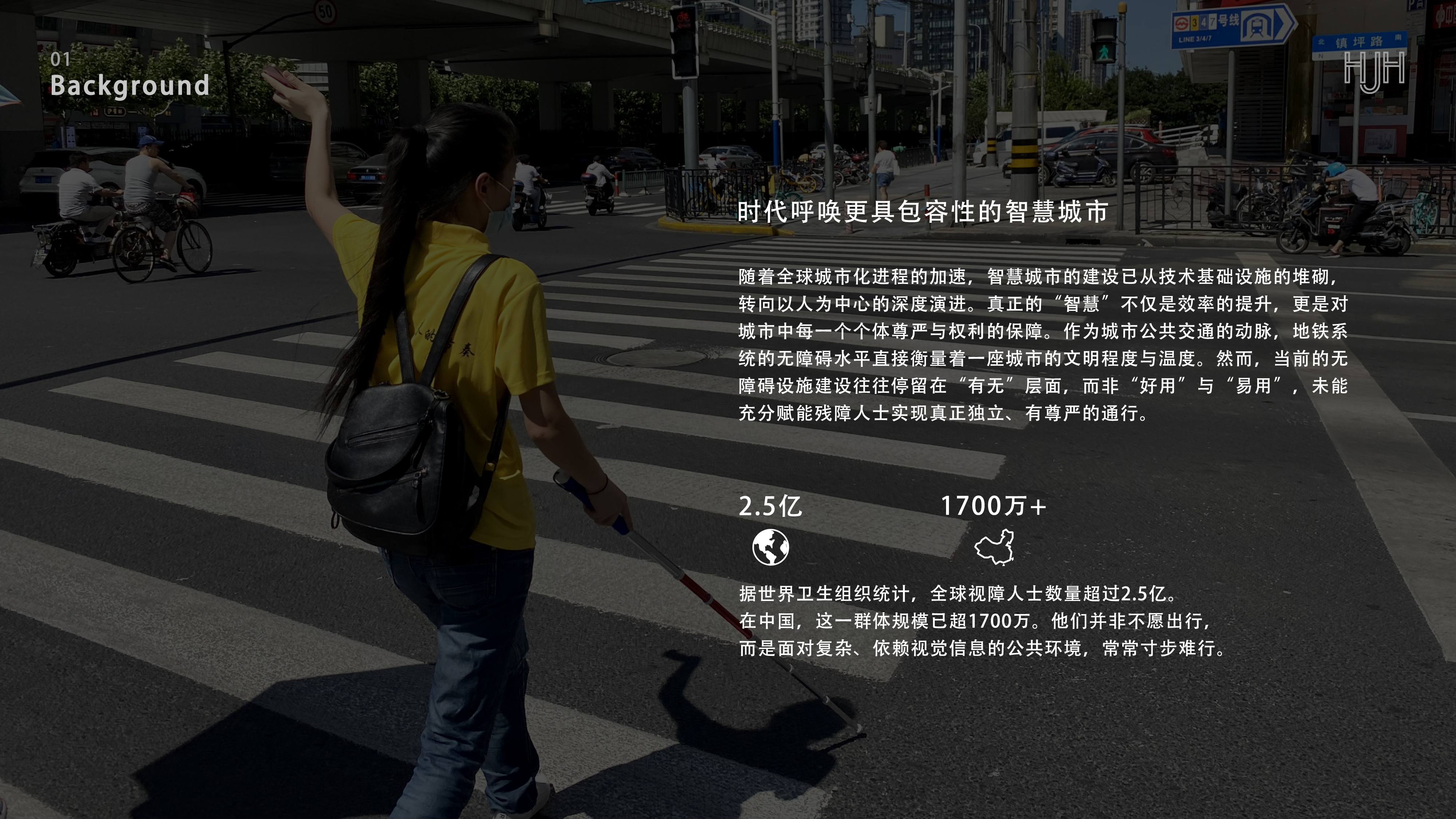
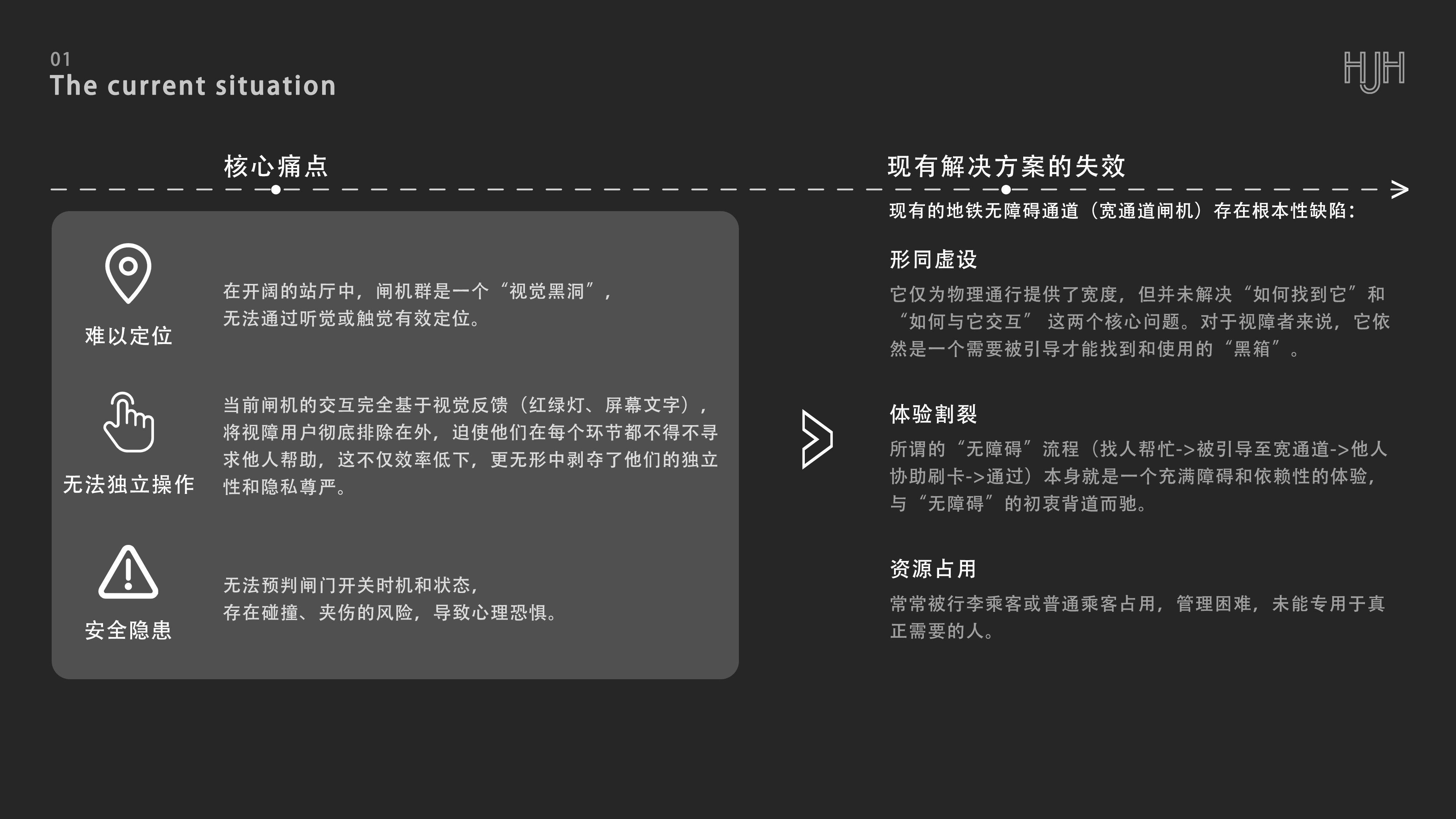
When I was in school, I was exposed to a concept about the dignity of people with disabilities. Has our "caring" today sometimes become a kind of over-gaze? We always feel that foreign countries do better, but when I see a blogger who travels around with a guide dog to a city like Hong Kong, where humanistic care is highly regarded, every time he takes the subway, he still needs to ask the staff or passers-by for help......
At that time, my idea was very simple, just be a robot that accompanied the whole process. It follows the visually impaired and solves all problems. But when I really started to do it and really started to think, I suddenly realized a problem. Is this essentially different from the staff who help the visually impaired through the subway?
Independence, these four words are much more difficult than I imagined.
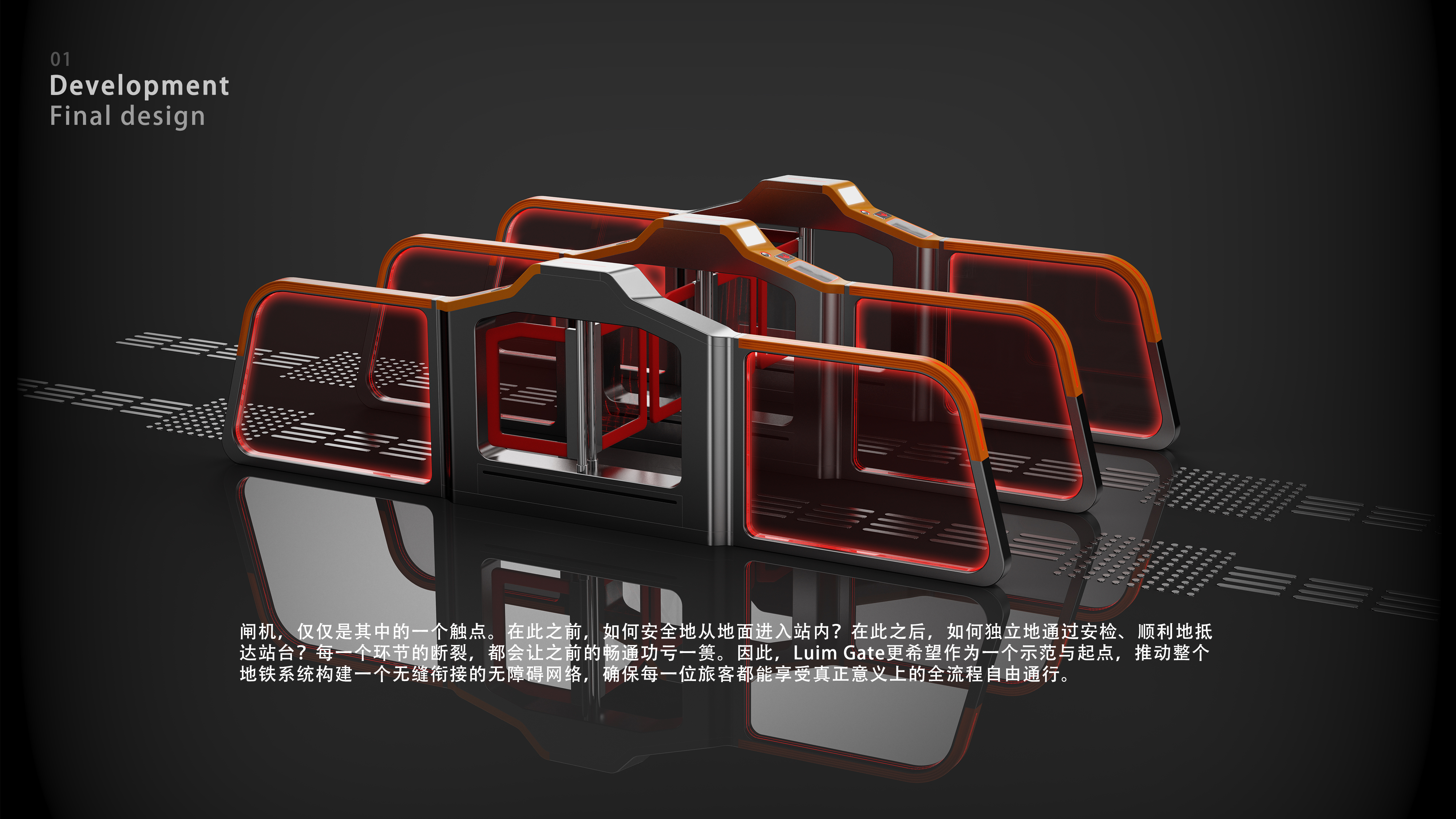
In this way, we went forward step by step. When the design of the gate was advanced to a certain extent, I also saw more clearly that only one gate was far from enough. The complete trip of a visually impaired person is from the ground to the station hall, through the security check from the station hall, through the gate, and then safely board the train. Every link is necessary, every link may become a breakpoint, and the gate is only one part of this long link. Behind the interlocking is the systematic transformation of countless products and facilities, and the re-understanding of the word "barrier-free" in the entire public environment.
More realistically, we have not even popularized and perfected the basic blind road.
So this is just a start.
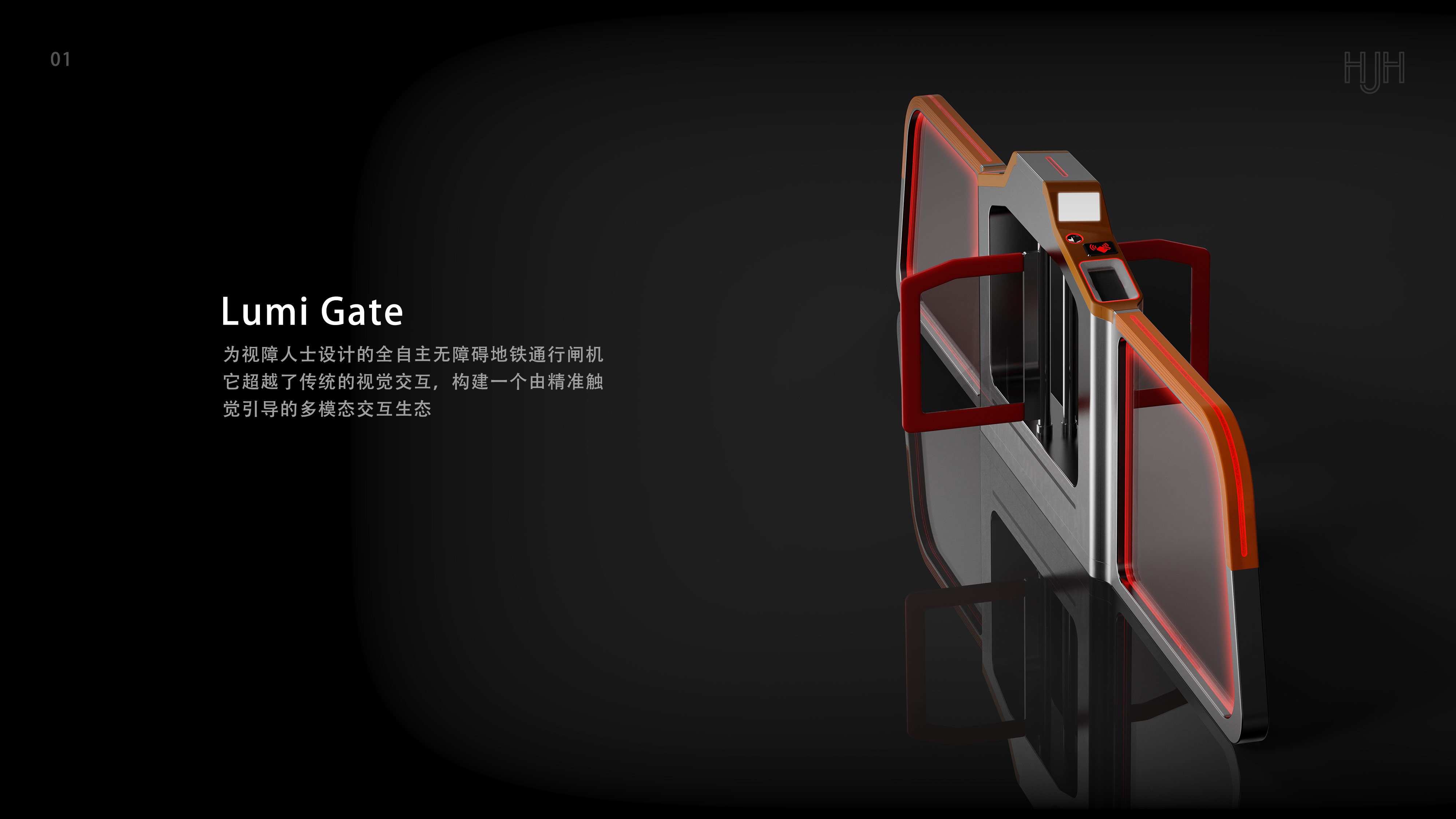
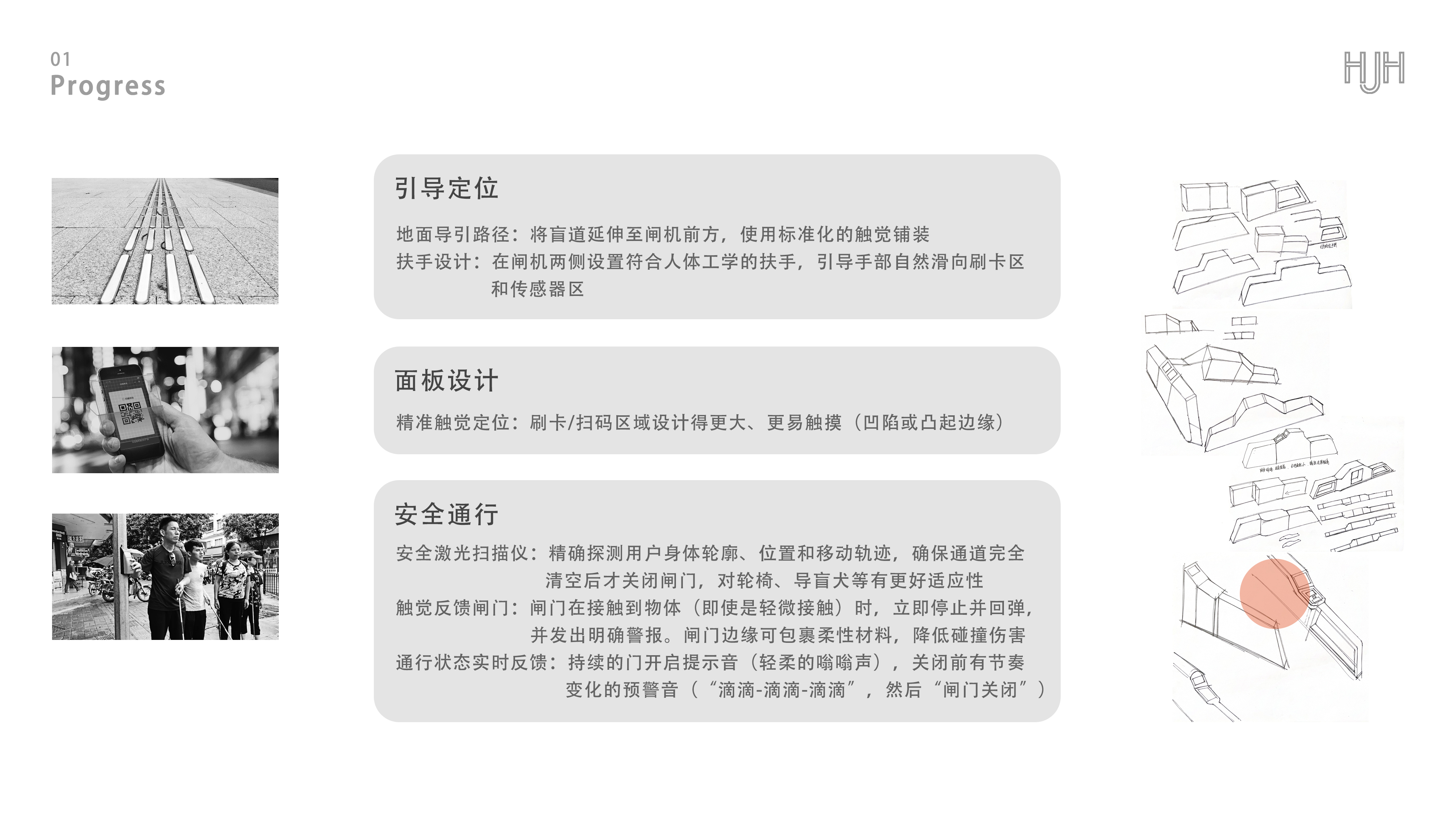
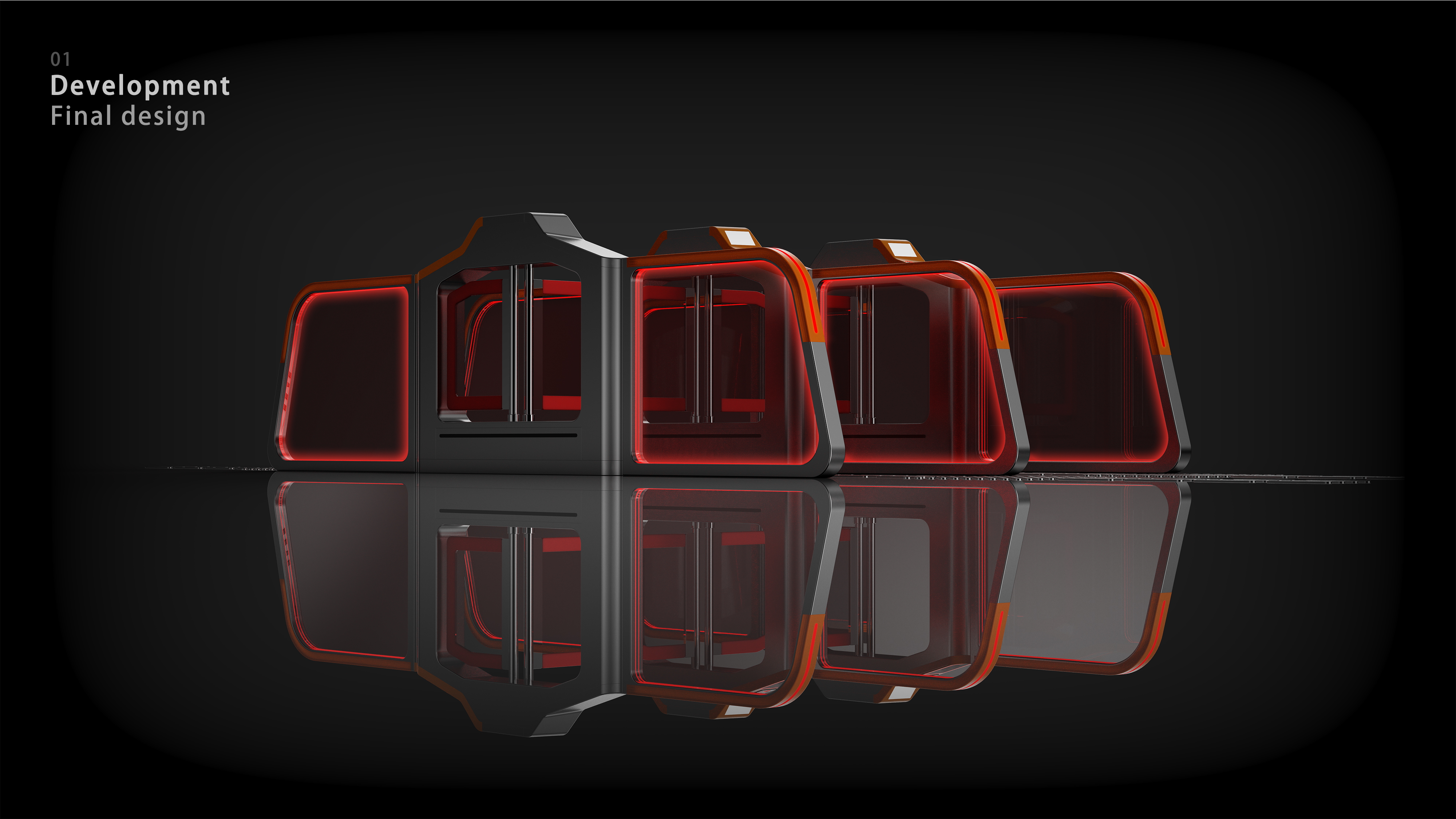
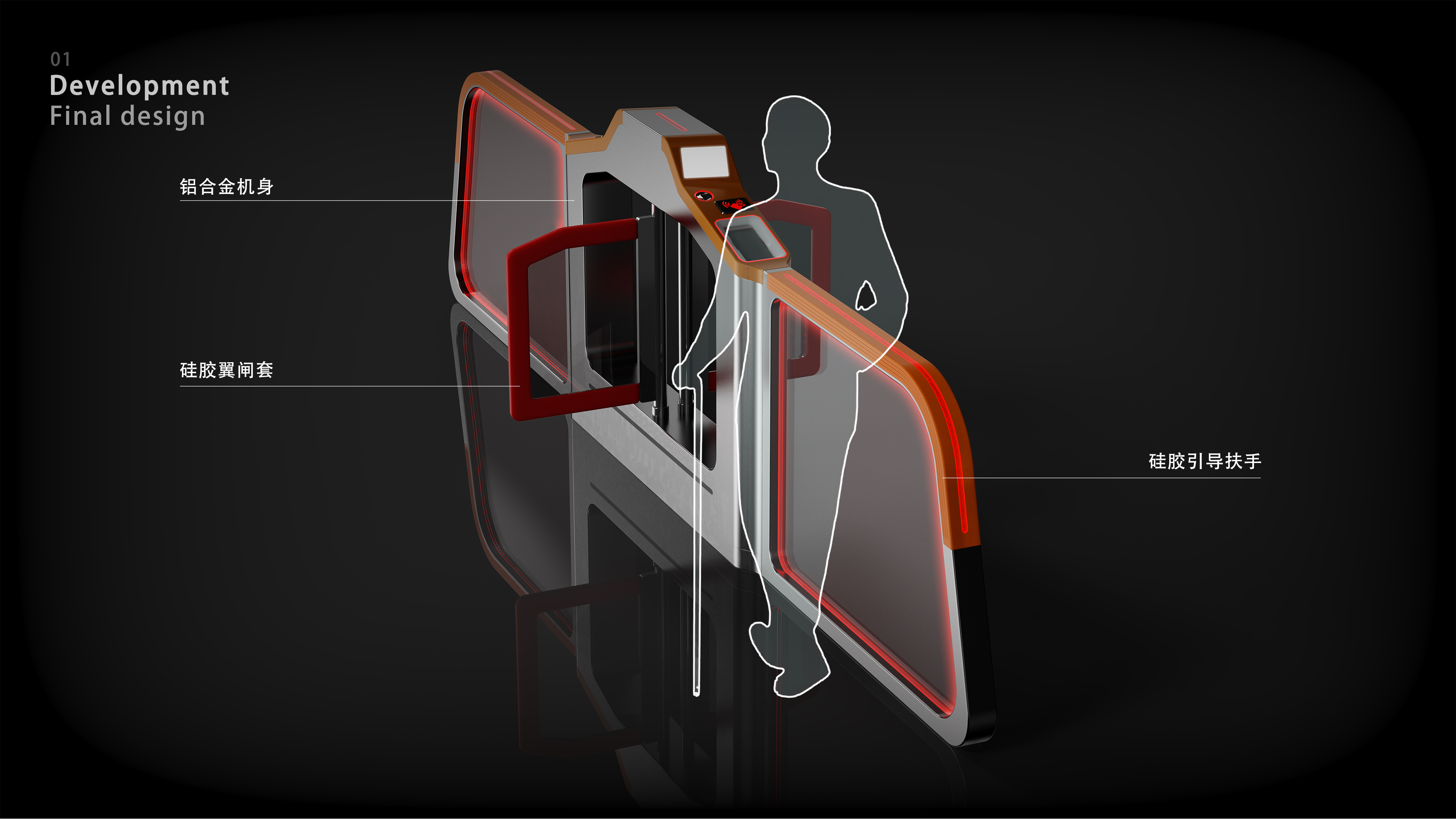
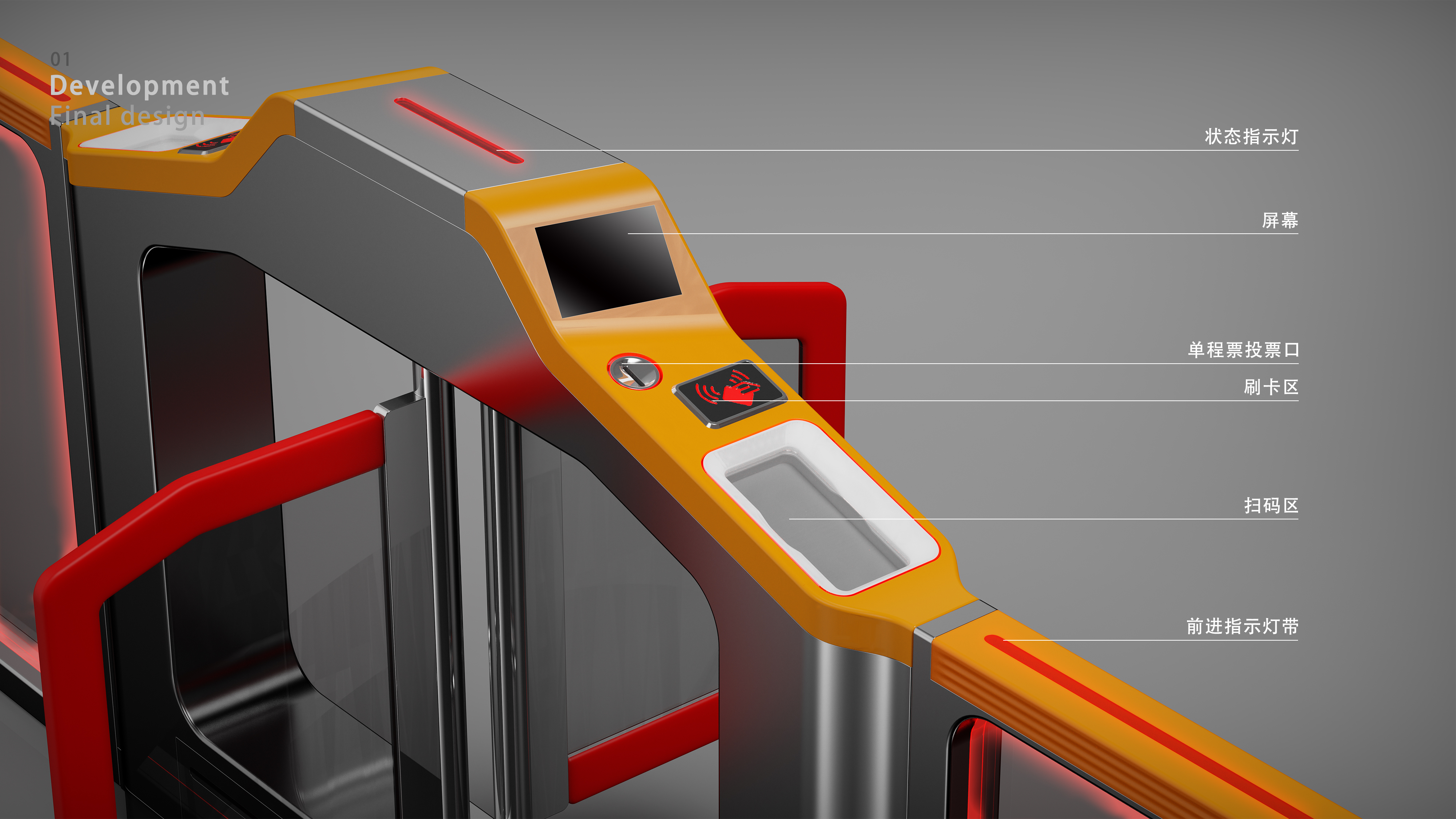
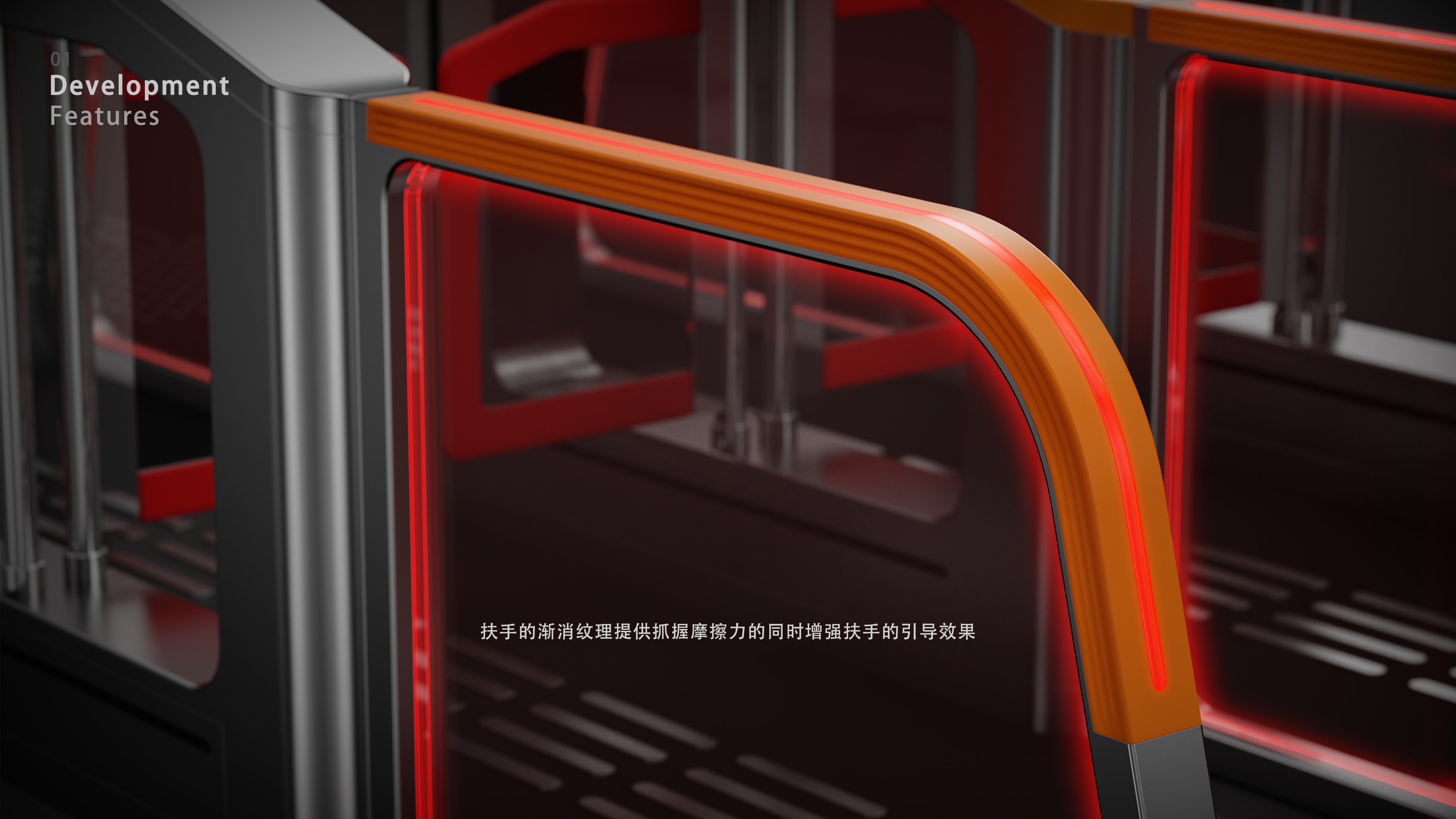
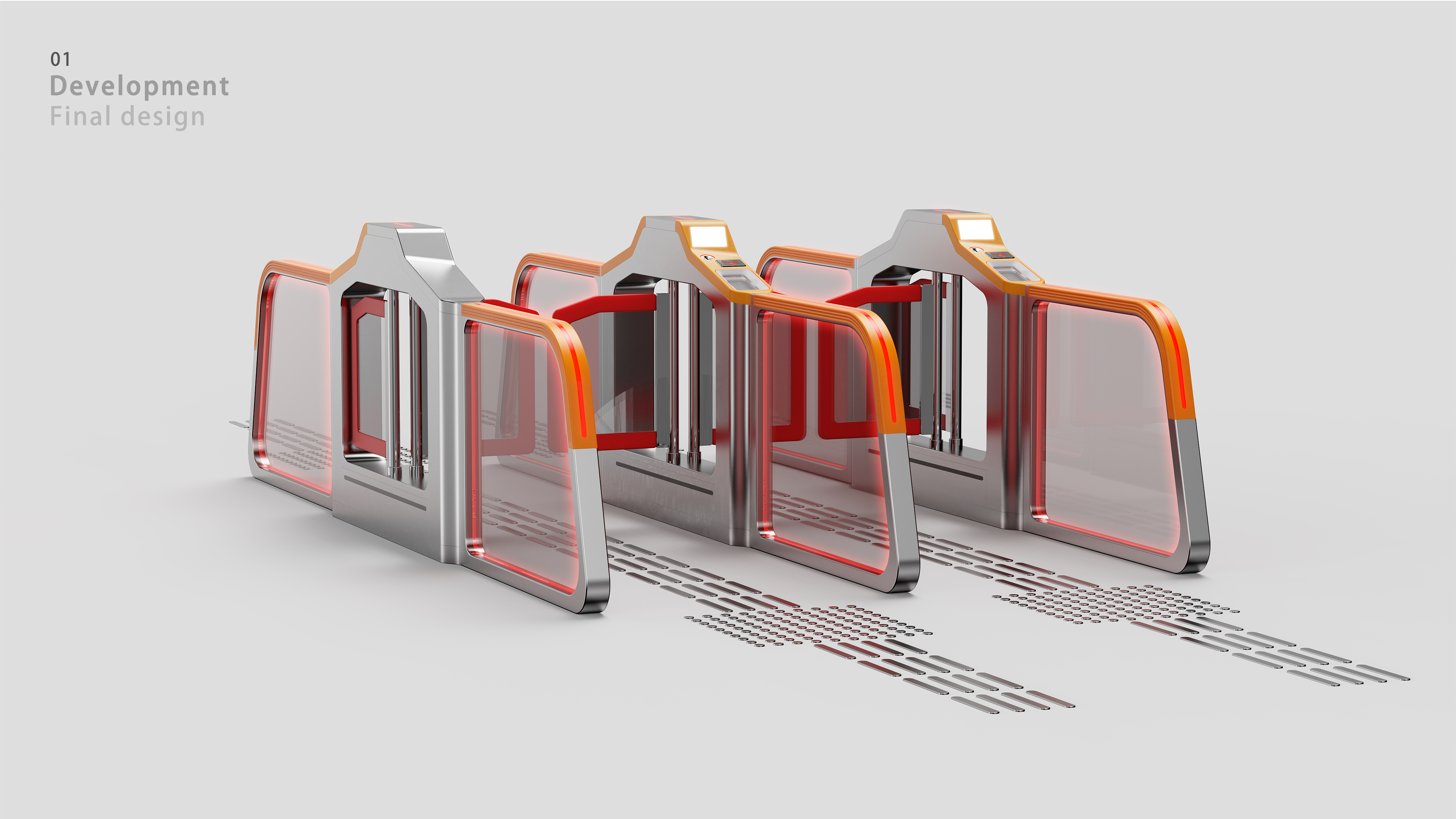
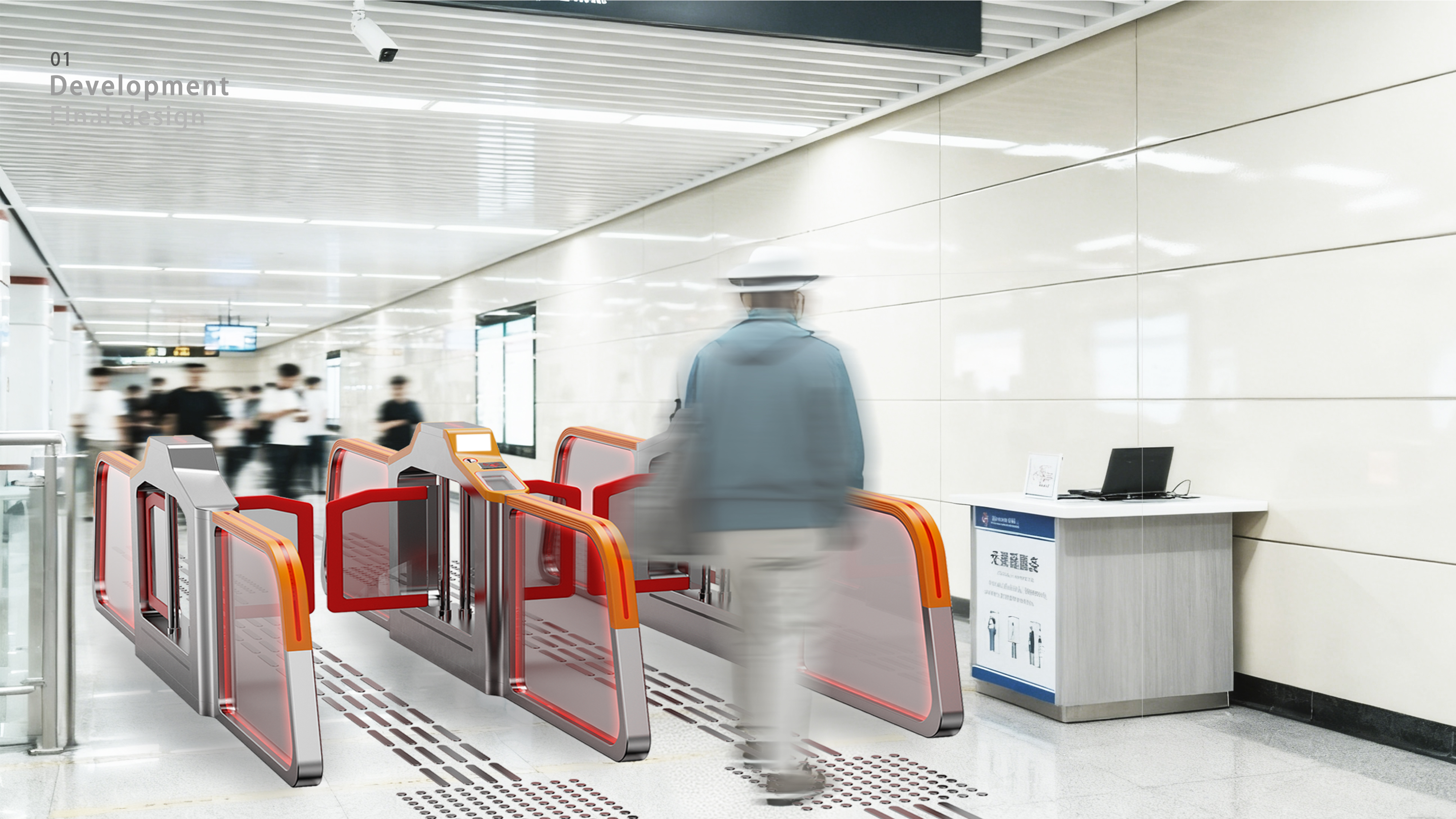
Back to the design itself. I am just a small appearance designer. What I am good at is thinking about how the modeling and behavior process can make the use experience smoother. I designed an extended handrail that extends outward from the gate entrance. When the visually impaired person approaches along the blind path, the sensor light bar on the handrail will light up, put your hand on it, and walk along the texture on the handrail. It is "tactile navigation". I went to the card swiping area, where I kept the code swiping port and expanded the sensing area to be large enough to wrap the entire phone in. I have learned that some visually impaired people cannot apply for a disability certificate and cannot use that card for various reasons. Mobile phones may be one of the few tools they can rely on. After completing the swipe, the light bar continues to guide and the handrail continues to accompany them until they safely walk out of the gate.
Throughout the design process, I didn't create any disruptive technology, just trying to make every movement more natural and coherent.




Professionalism
Quite good.