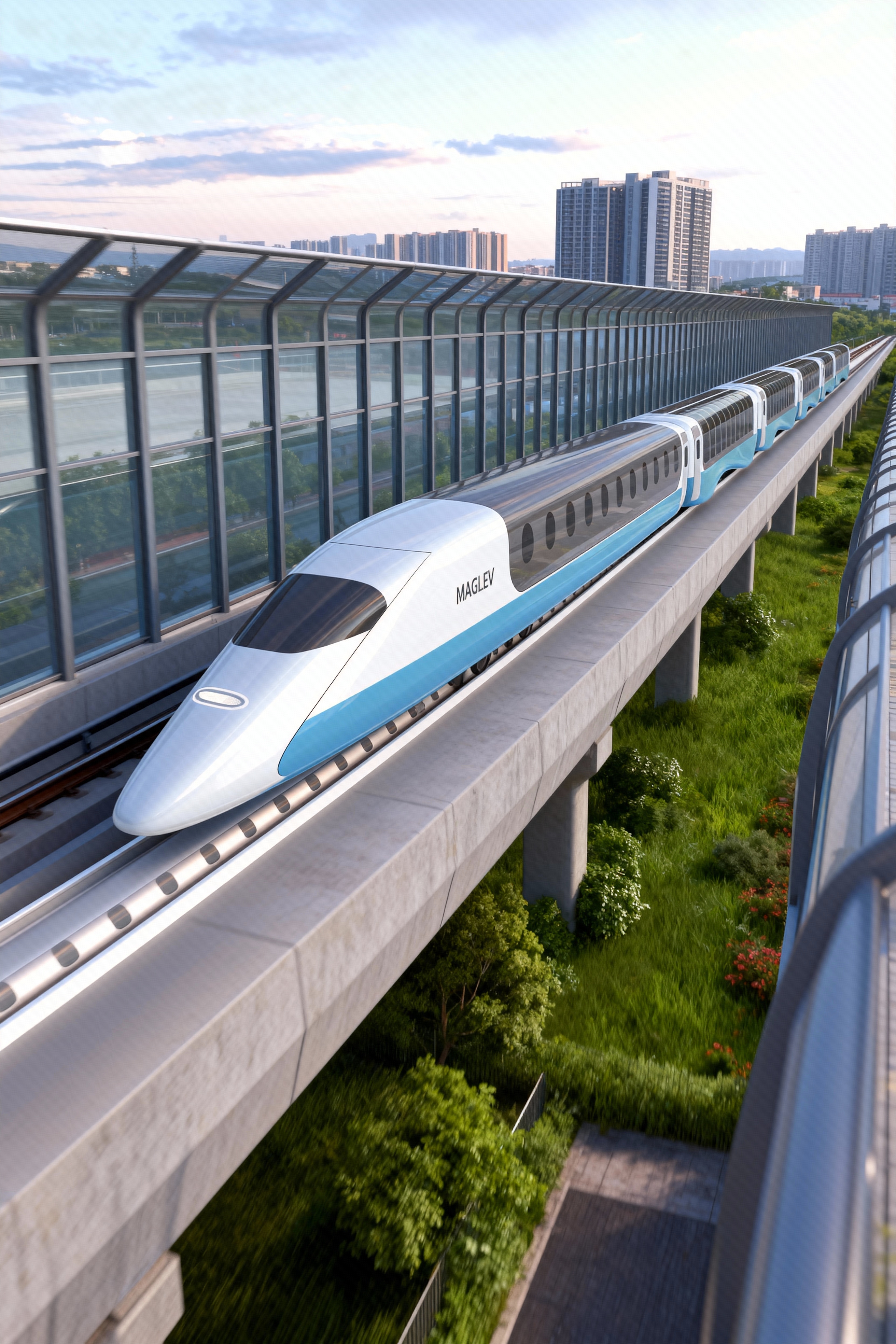
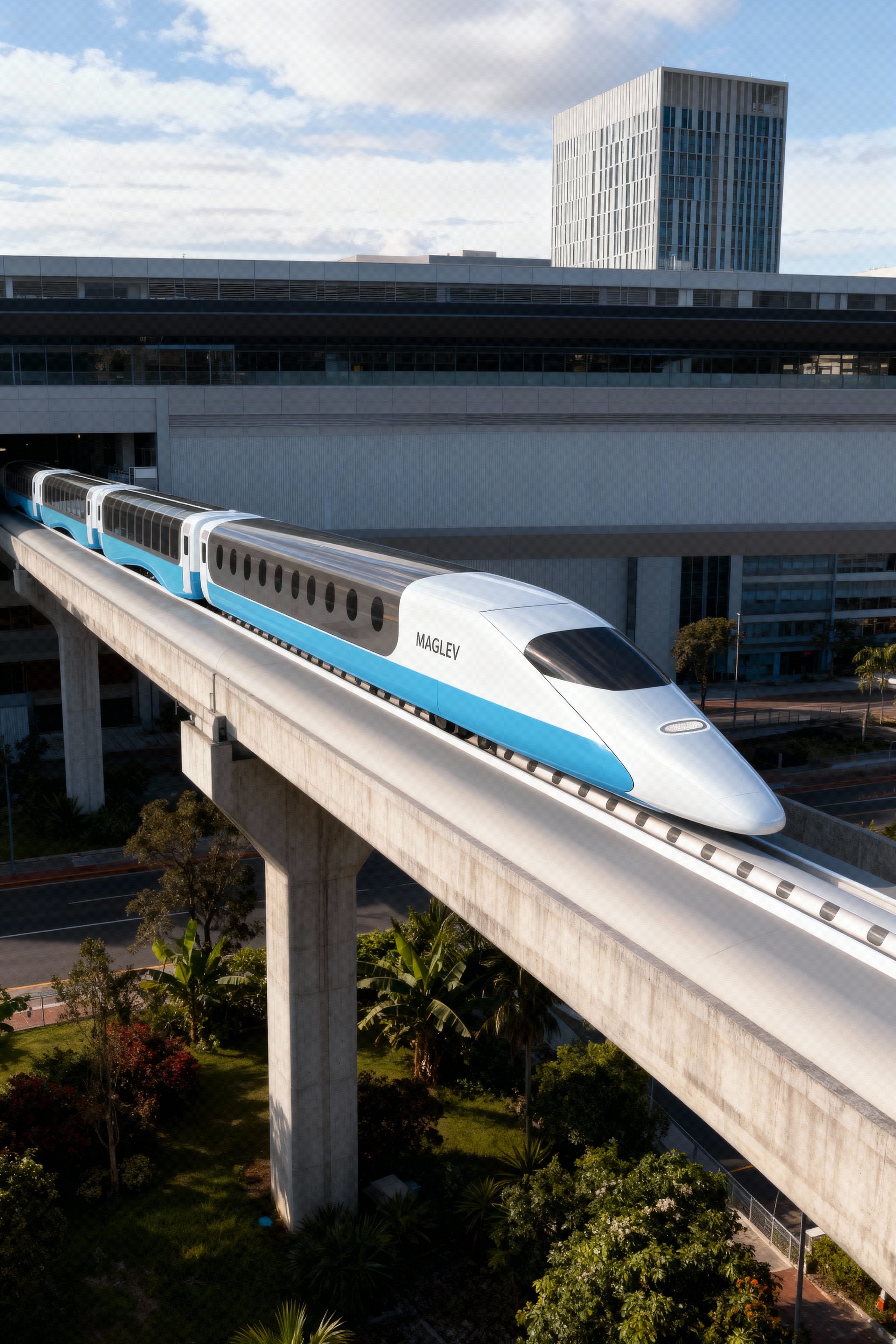
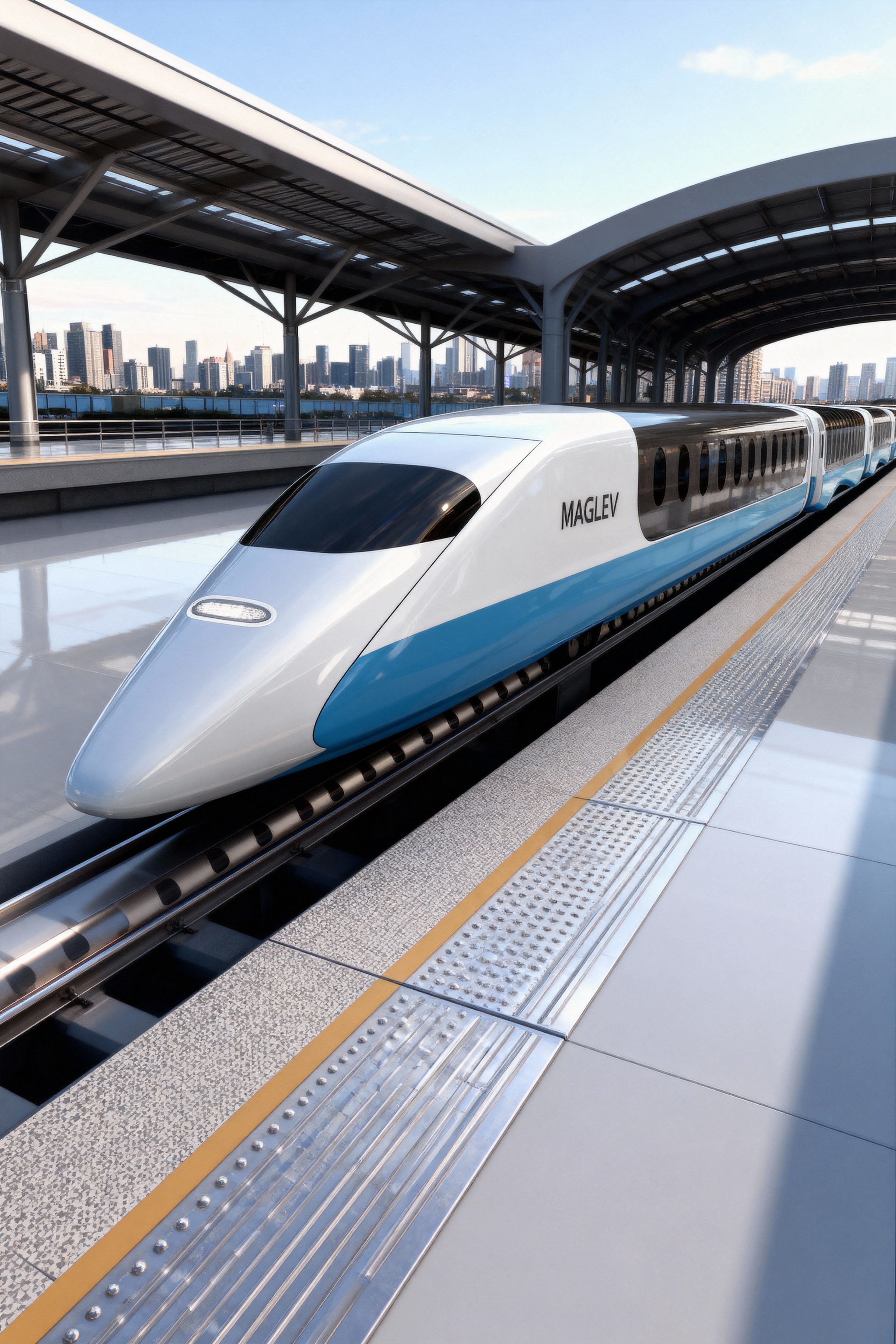
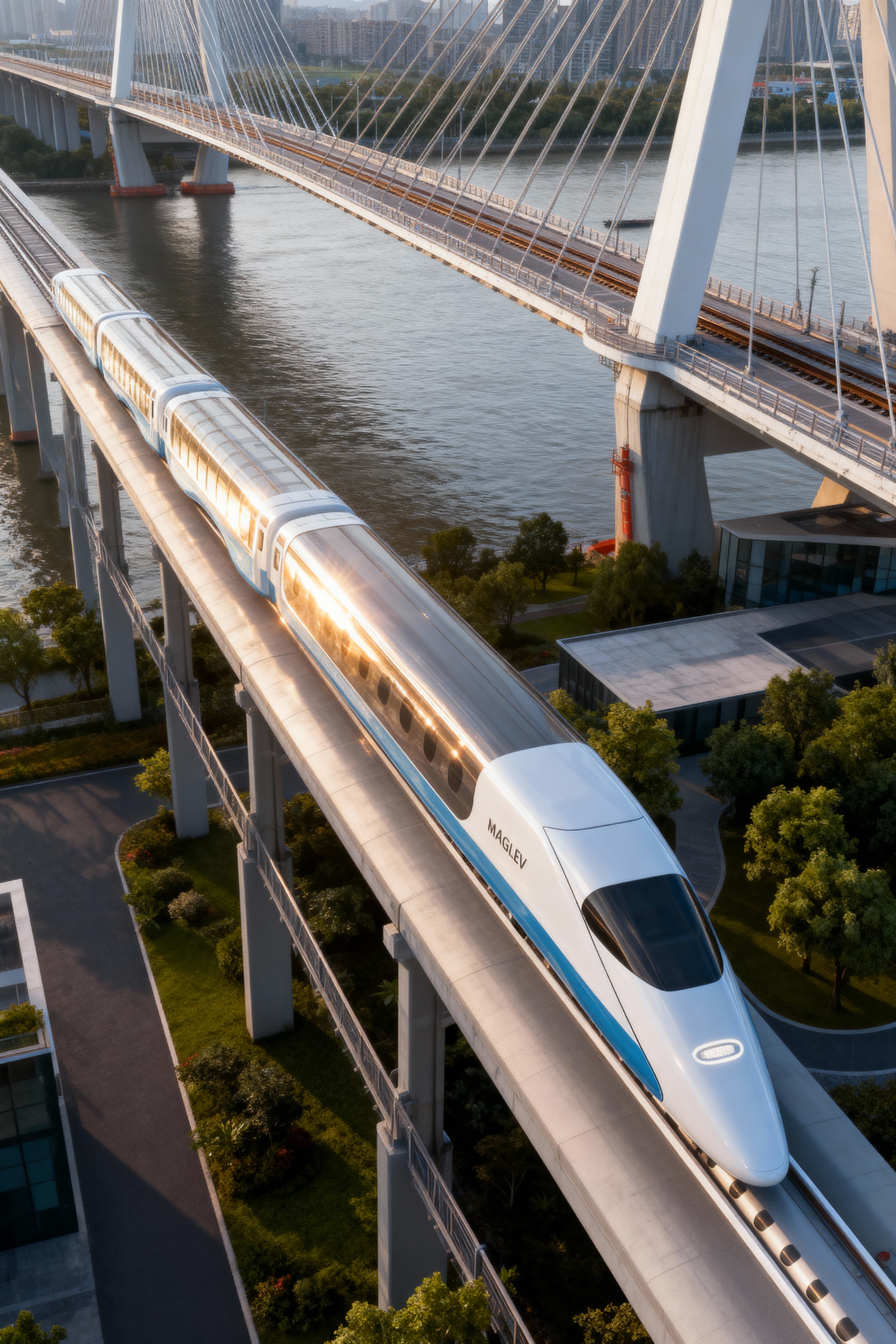
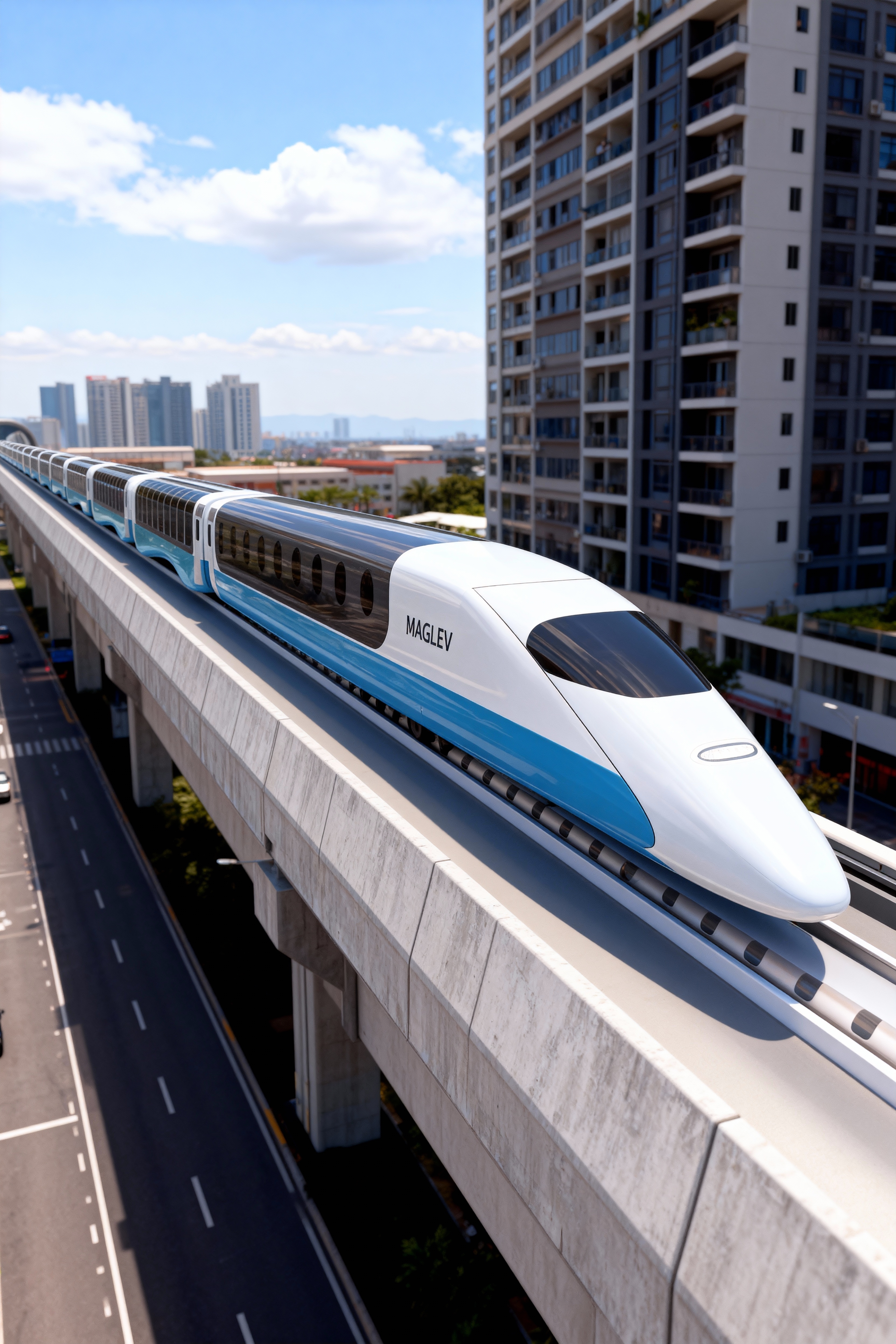
The split maglev platform takes "low-cost upgrade and high-reliability operation" as the core goal, and provides a practical path for the upgrading of urban rail transit. Its core value is to break the high cost barriers of traditional maglev systems through modular design and achieve seamless integration with existing facilities.
The platform adopts a split architecture design, disassembling the magnetic levitation function into standardized modules, and has strong versatility and adaptability-it can directly connect with the existing rail beams, traction systems and other facilities of rail transit, and can complete the upgrading of traditional trains to magnetic levitation trains without large-scale transformation, thus greatly reducing the cost and complexity of system transformation. In the core suspension structure, the two wings of the "N"-shaped track beam are laid with high conductivity aluminum plates, and permanent magnets are installed at the corresponding positions of the car body and arranged in a HALBACH array, which can strengthen the one-sided magnetic field strength and improve the suspension efficiency.
The operation mechanism follows the principle of "dynamic suspension and intelligent regulation": in the parking state, the car body is supported on the track by wear-resistant rollers to ensure static stability; After starting, the linear motor traction car body accelerates, the permanent magnet and the aluminum plate produce relatively high-speed movement, and the eddy current magnetic field is induced in the aluminum plate, which forms repulsion with the permanent magnet to realize suspension. The system is equipped with artificial intelligence adaptive algorithm, real-time monitoring of track smoothness and running speed, dynamic adjustment of suspension height, to ensure driving stability and passenger comfort.
Materials and safety design form a double guarantee: carbon fiber composite materials are widely used in the car body, which reduces the weight by more than 30% compared with traditional metal materials, thus reducing energy consumption and improving acceleration performance; In the safety redundancy design, in addition to the conventional suspension system, the backup roller mechanism automatically switches when the power is cut off or the suspension system fails, ensuring that the train can slide safely along the track to the station.
Through the combination of "reuse of existing facilities + standardized modules + intelligent control", the scheme solves the pain points of high cost and difficulty in popularization of traditional magnetic levitation, and provides a new choice with both economy and reliability for efficient upgrading of urban traffic.
Areas of Expertise: Product Innovation Design | Differentiated Design and Modeling Rendering | Innovative Solutions
Core support: patent scheme iteration/circumvention design


The copyright of this work belongs to 产品创新创意设计. No use is allowed without explicit permission from owner.
New user?Create an account
Log In Reset your password.
Account existed?Log In
Read and agree to the User Agreement Terms of Use.
Please enter your email to reset your password


Full sense of science and technology
The cost of this kind of transportation is very high.
good light body