Shooting one or two visually striking shots isn’t too difficult; the real challenge lies in stitching them together into a coherent narrative. The face, clothes and hairstyle of the characters cannot change suddenly, the body shape of the golden retriever cannot be bigger and smaller, and the position of the wardrobe, the lighting of the bedroom and the line of sight of the front and rear lenses should also be connected.
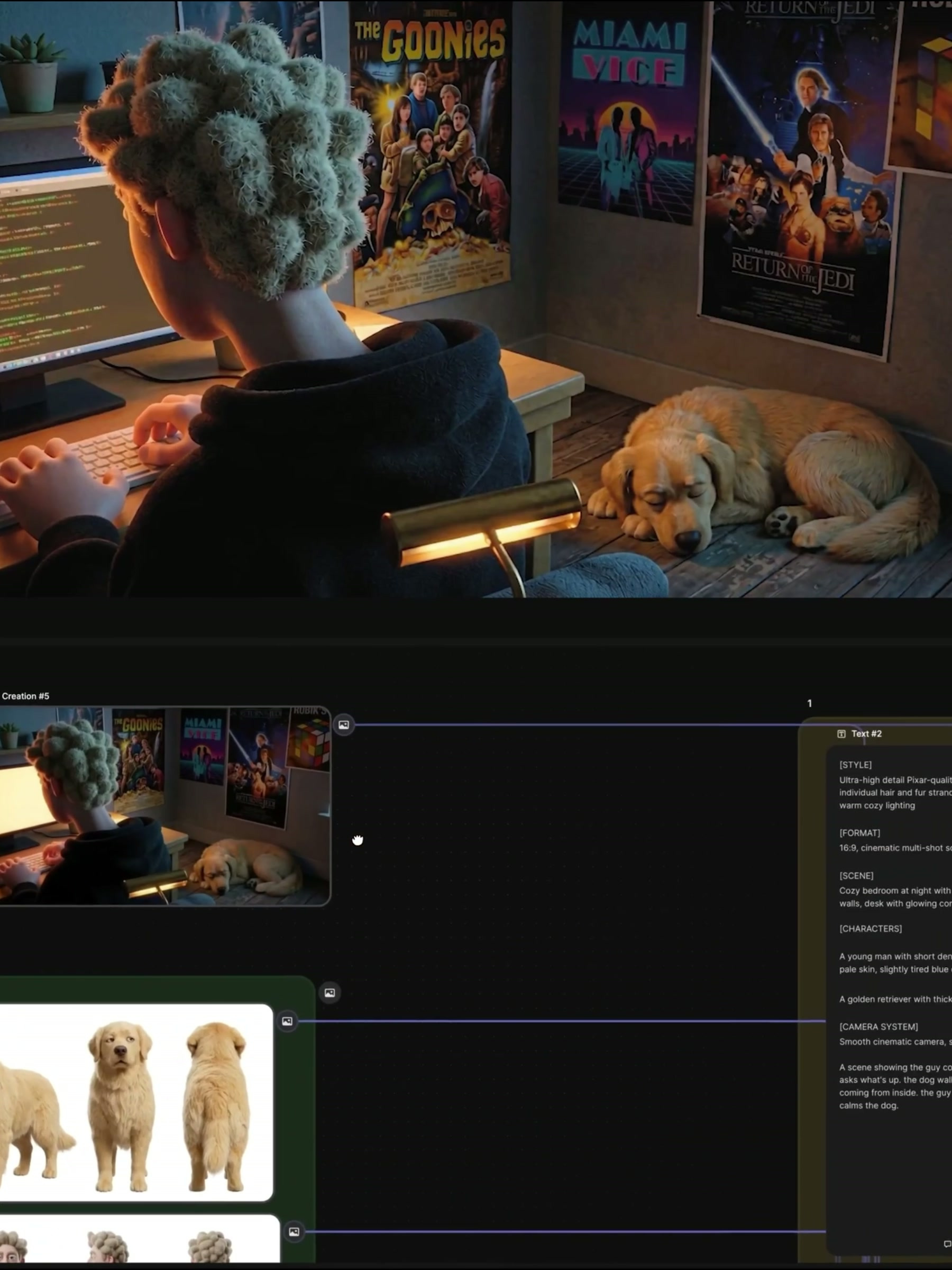
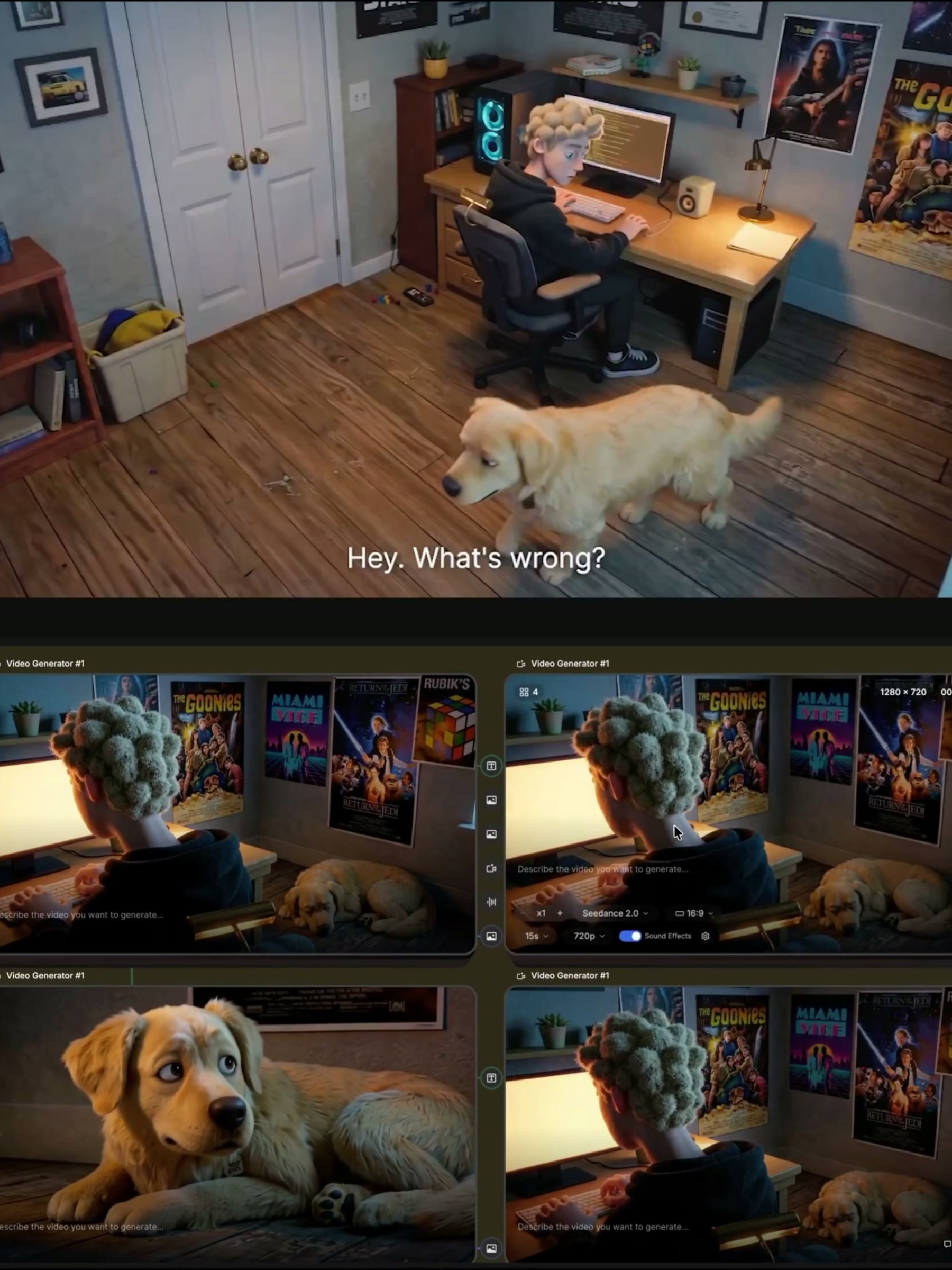
This time I made a short film with suspense: the teenager wrote code in the bedroom, golden retriever heard the movement in the wardrobe, and the two went to check it together. At first, nothing appeared when the door was opened; only after the少年 had relaxed did the green monster emerge from the wardrobe.
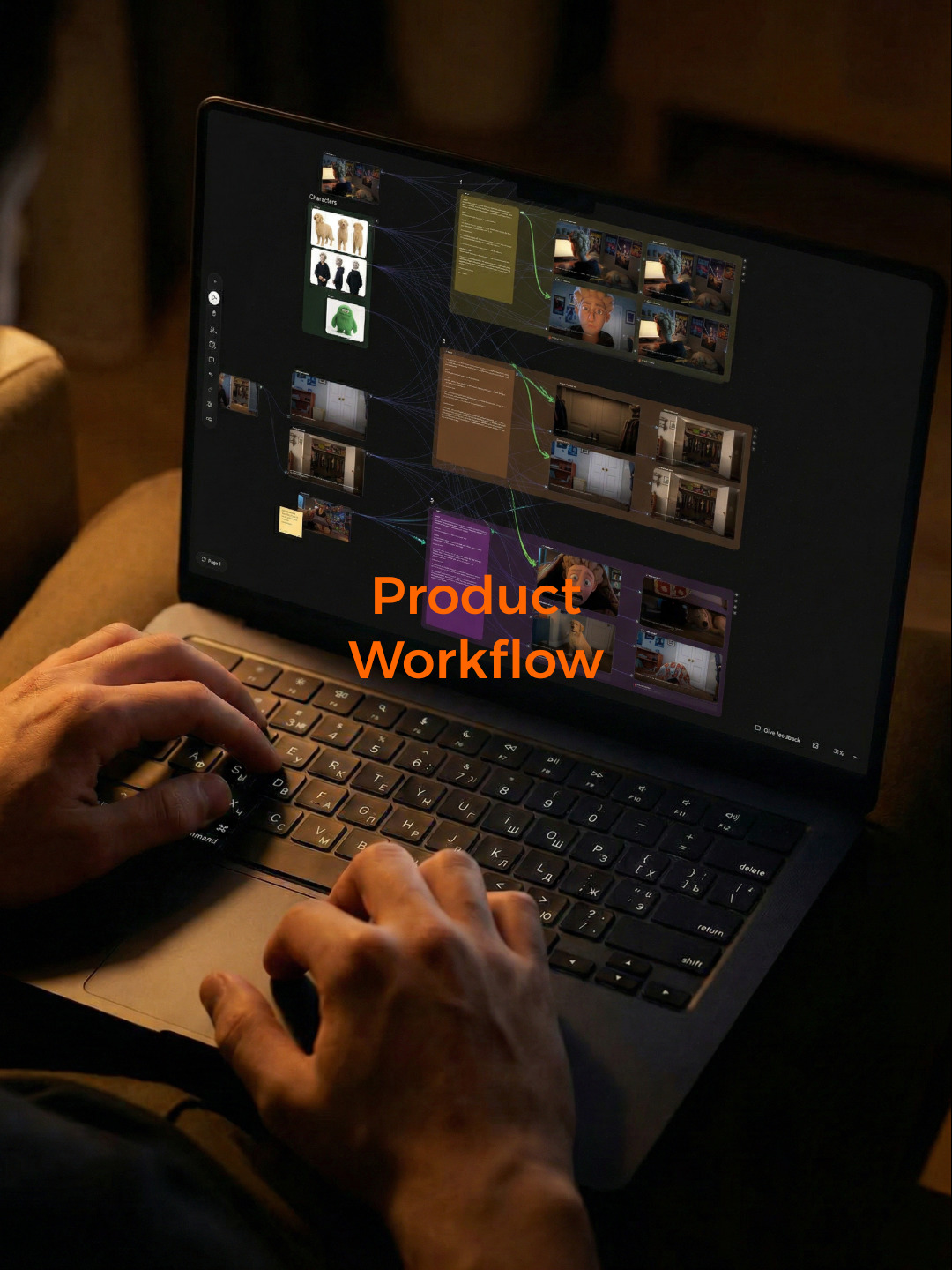
In the video, both the piece and the node canvas are recorded, so instead of retelling each click, the part of the canvas that really affects continuity is taken apart. The whole set of methods can be summarized in one sentence: first fix what will not change, and then segment the actions that will change.
1. First, separate the “fixed items” from the “variable items.”
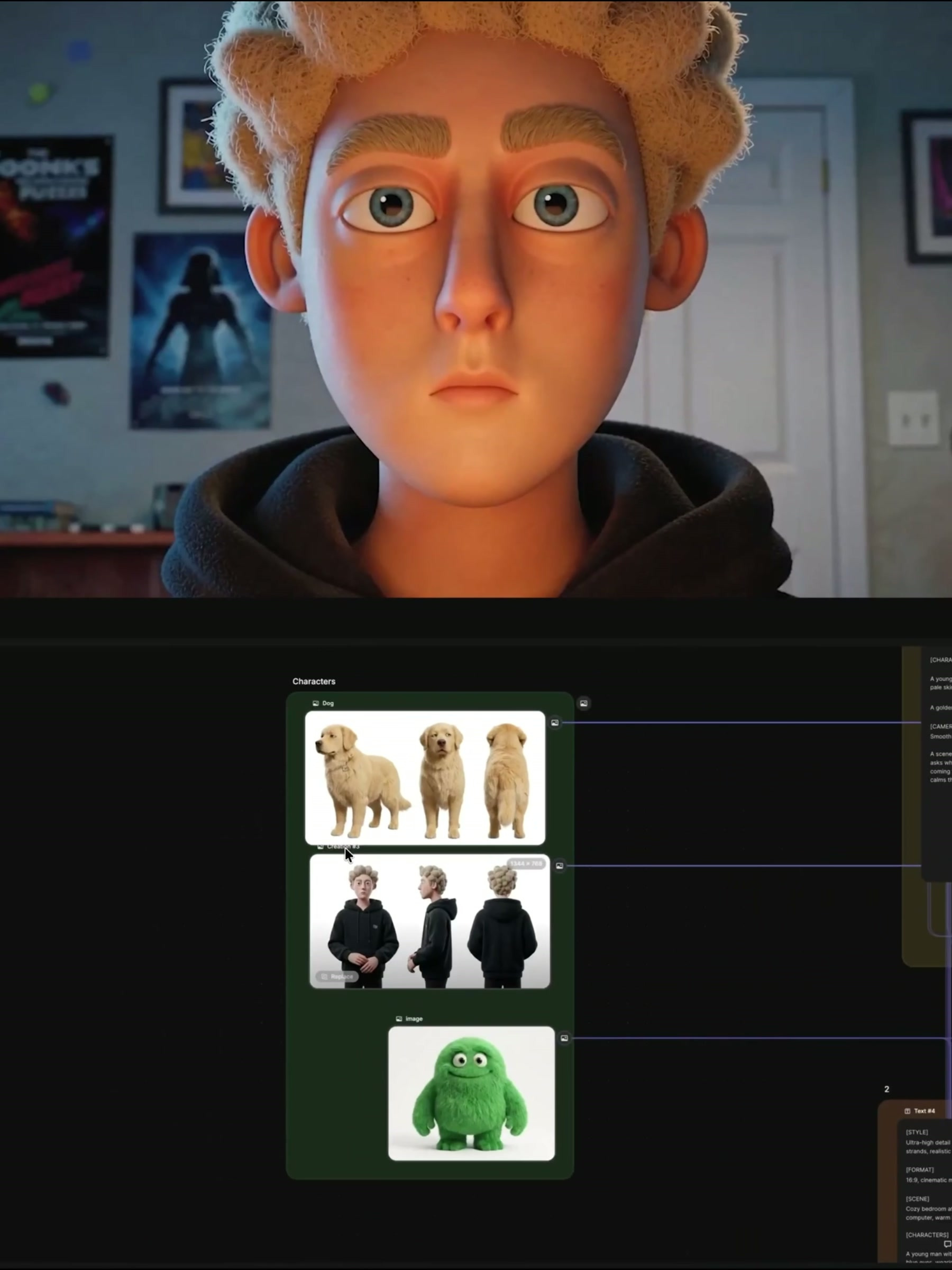
I'll start by identifying three characters: the teenager in the black hoodie, the blond-haired dog, and the green stuffed monster that ends up on the stage. The bedroom, wardrobe, warm-toned lighting, and retro 3D animation textures are all fixed elements. Lens angle, character action, expression and each piece of the plot, is the change.
The character reference diagram is placed on the side of the canvas alone, which is more stable than each redescription. Later, whether it generates a close-up shot of a teenager, a golden retriever looks back, or a monster appears, it all starts from the same set of references. The purpose of this is not to make each frame exactly the same, but to give the model a continuously visible identity anchor.
2. write the public description together once.
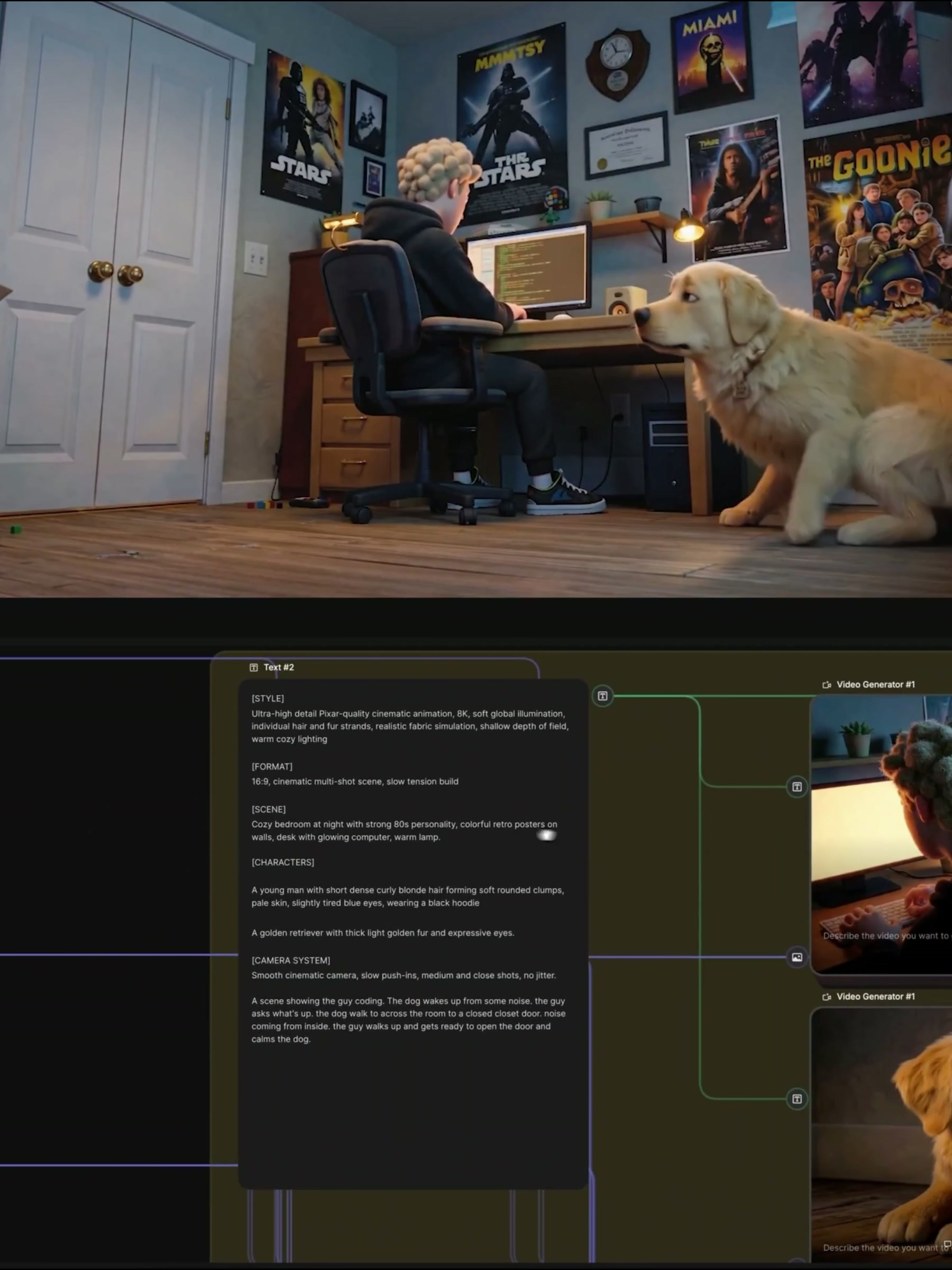
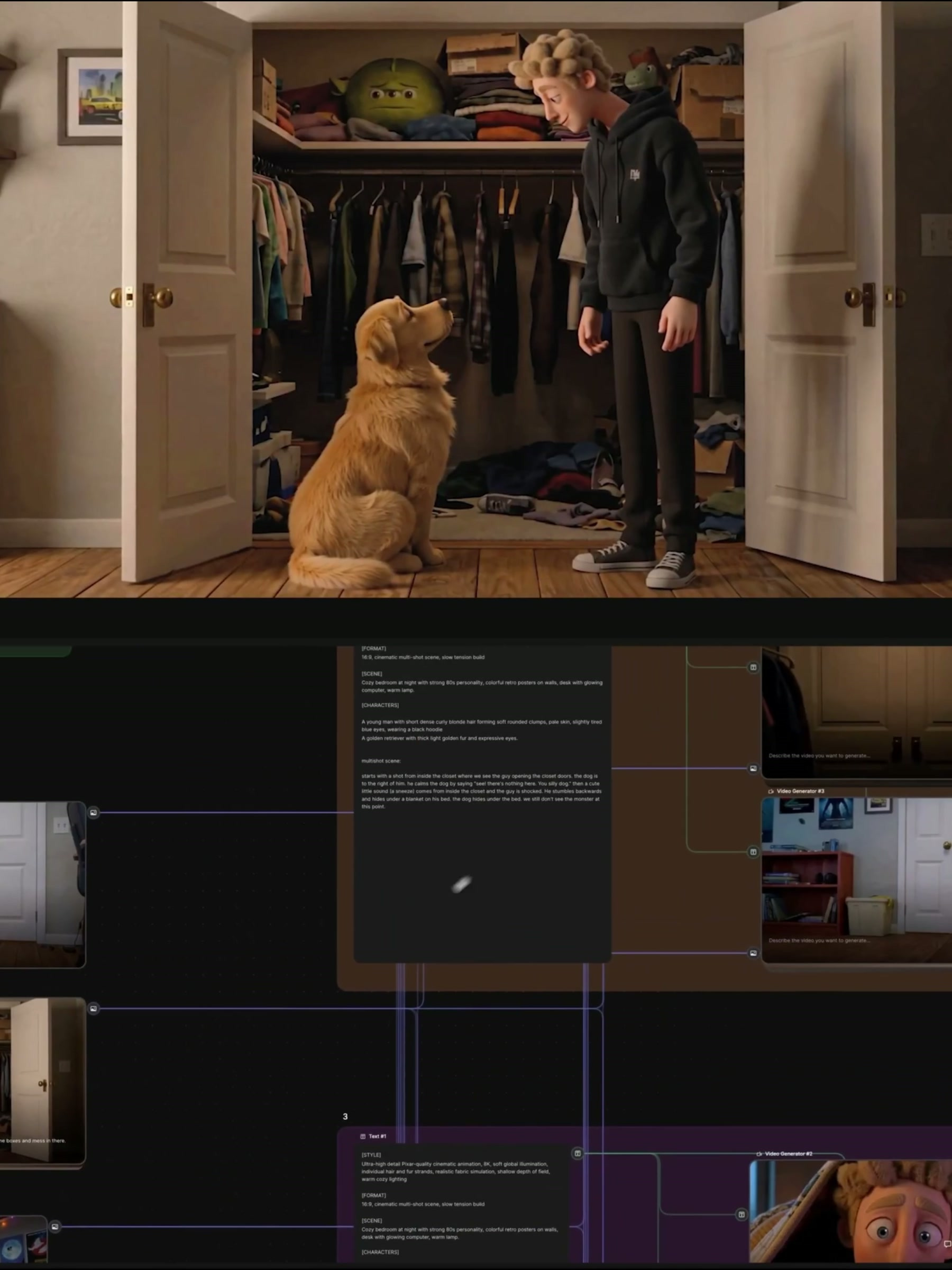
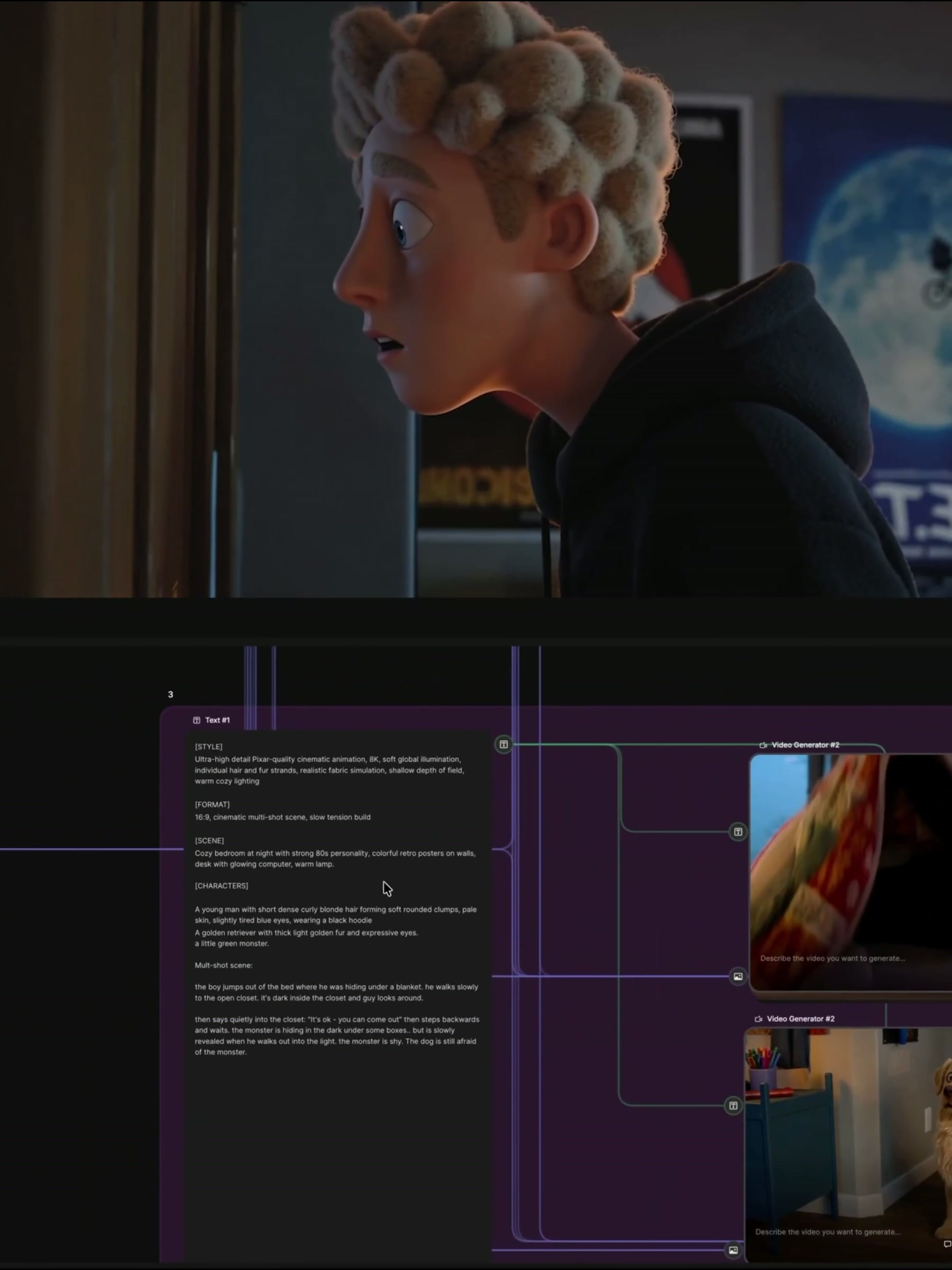
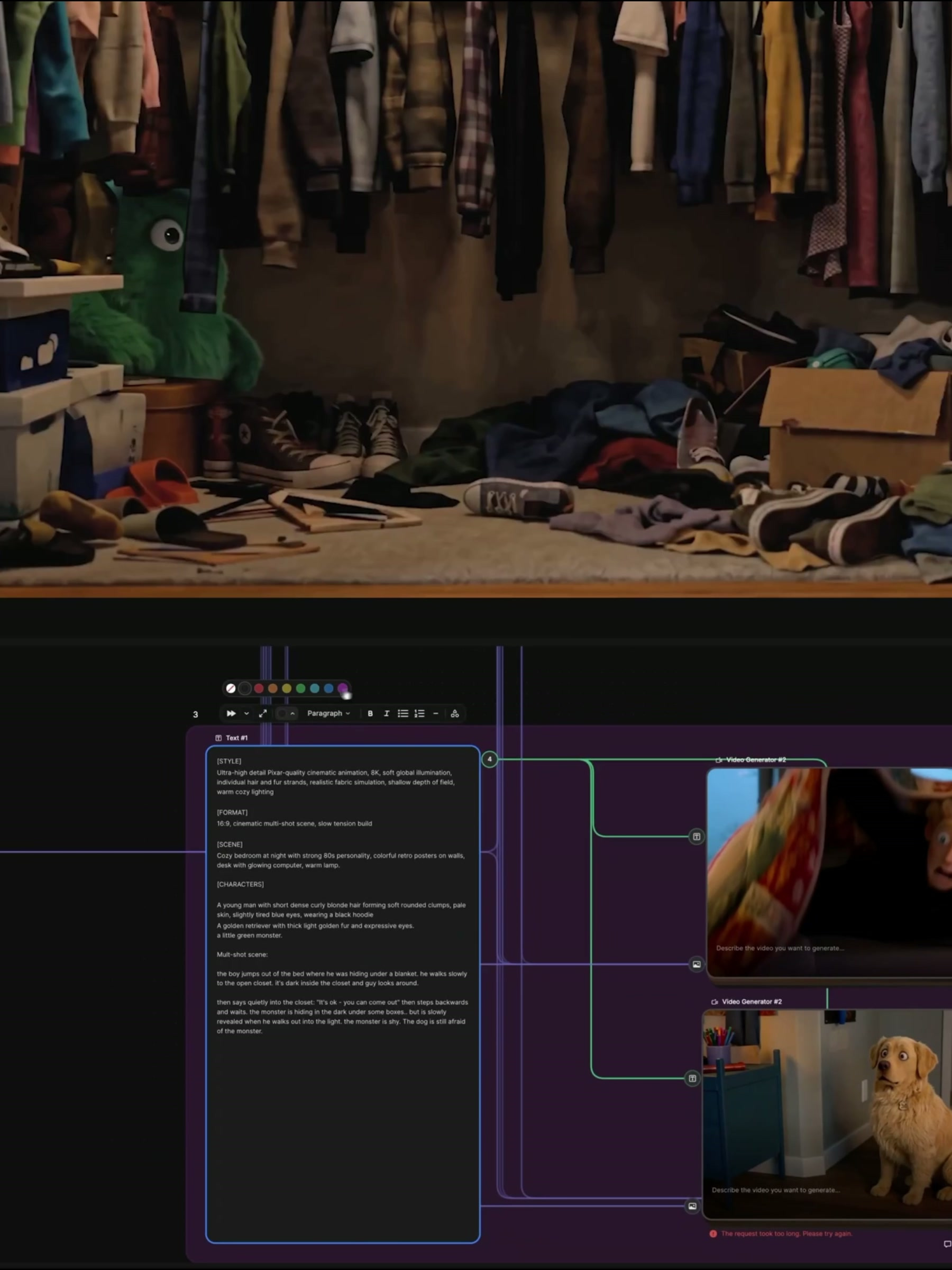
The text node in the canvas does not knead all the content into a large segment, but is divided into STYLE, FORMAT, SCENE, CHARACTERS, CAMERA SYSTEM and other parts. This structure is very practical: style, frame, room layout, character appearance and camera language are centrally maintained, and each plot only complements this action.
If the juvenile clothes need to be adjusted, I will only change the role part. If the light in the bedroom is wrong, change the scene. Only one copy of the public description is kept, which can avoid forgetting to update a certain paragraph after copying many times.
3. Divide it into three segments based on plot functions
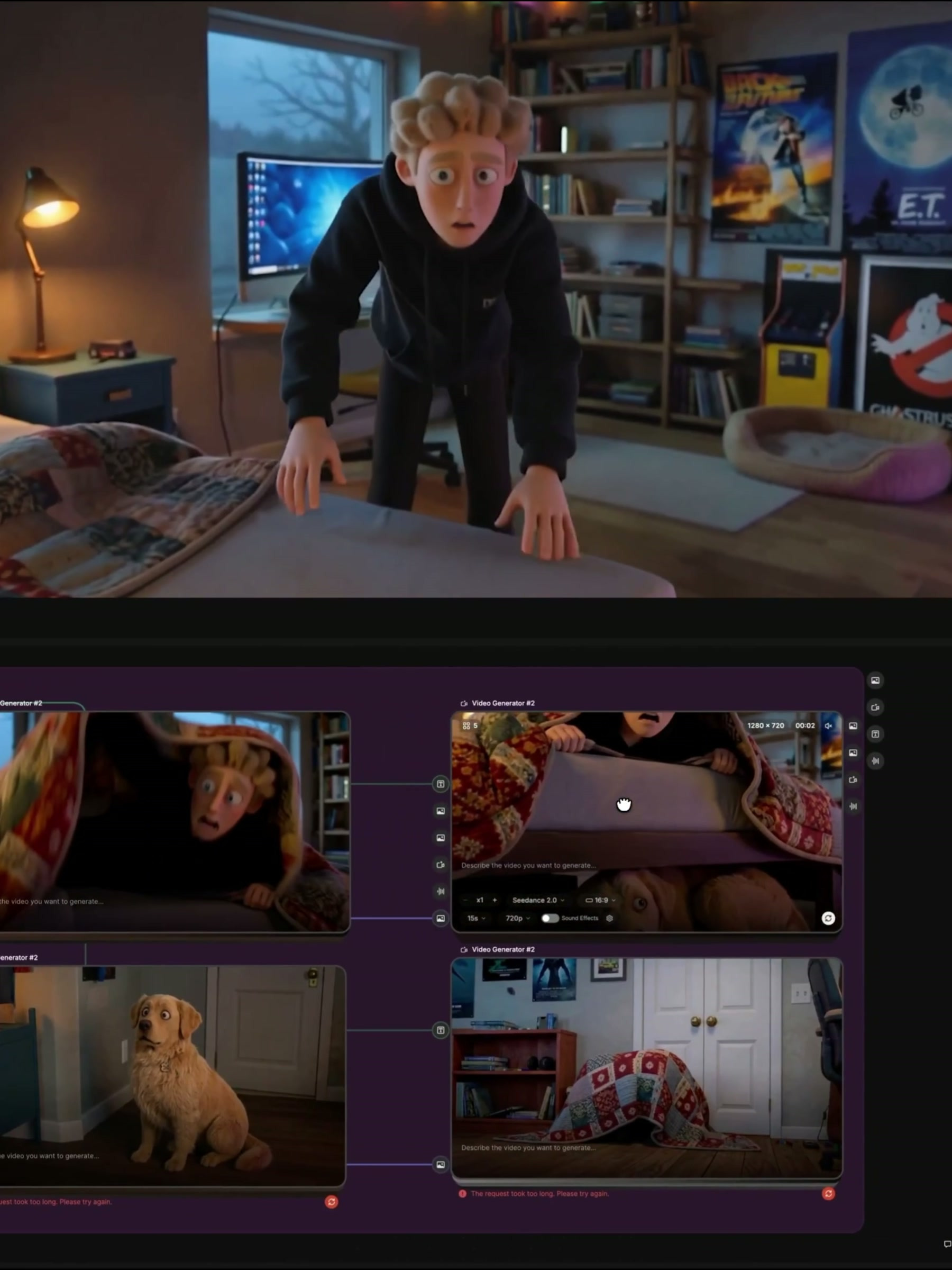
This short film is not generated by a node from beginning to end, but is divided into three color groups. The first paragraph is responsible for establishing characters and anomalies: teenagers work, golden retriever hears voices, they walk to the wardrobe. The second paragraph is responsible for checking and easing: the wardrobe is open and empty, and the teenager soothes the golden retriever. The third paragraph pulls the suspense back and lets the real monster appear.
After segmentation, each video clip addresses only a single, well-defined action. Several shots in the first paragraph share the same set of characters and scene descriptions, but deal with "work", "hear movement" and "walk to the wardrobe" separately ". The simpler the task of the short shot, the easier it is to control the action and the easier it is to replace it later.
Timeouts or failures are also encountered during the build process. Individual video nodes can be seen in the canvas to report errors, but this does not require the whole short film to be repeated. Keep the shots that have passed, retry only the failed nodes, and shorten the action or delete conflicting requirements if necessary. The biggest practical benefit of a modular workflow is knowing which one to change when something goes wrong.
Lock the scene state before 4. a complex action
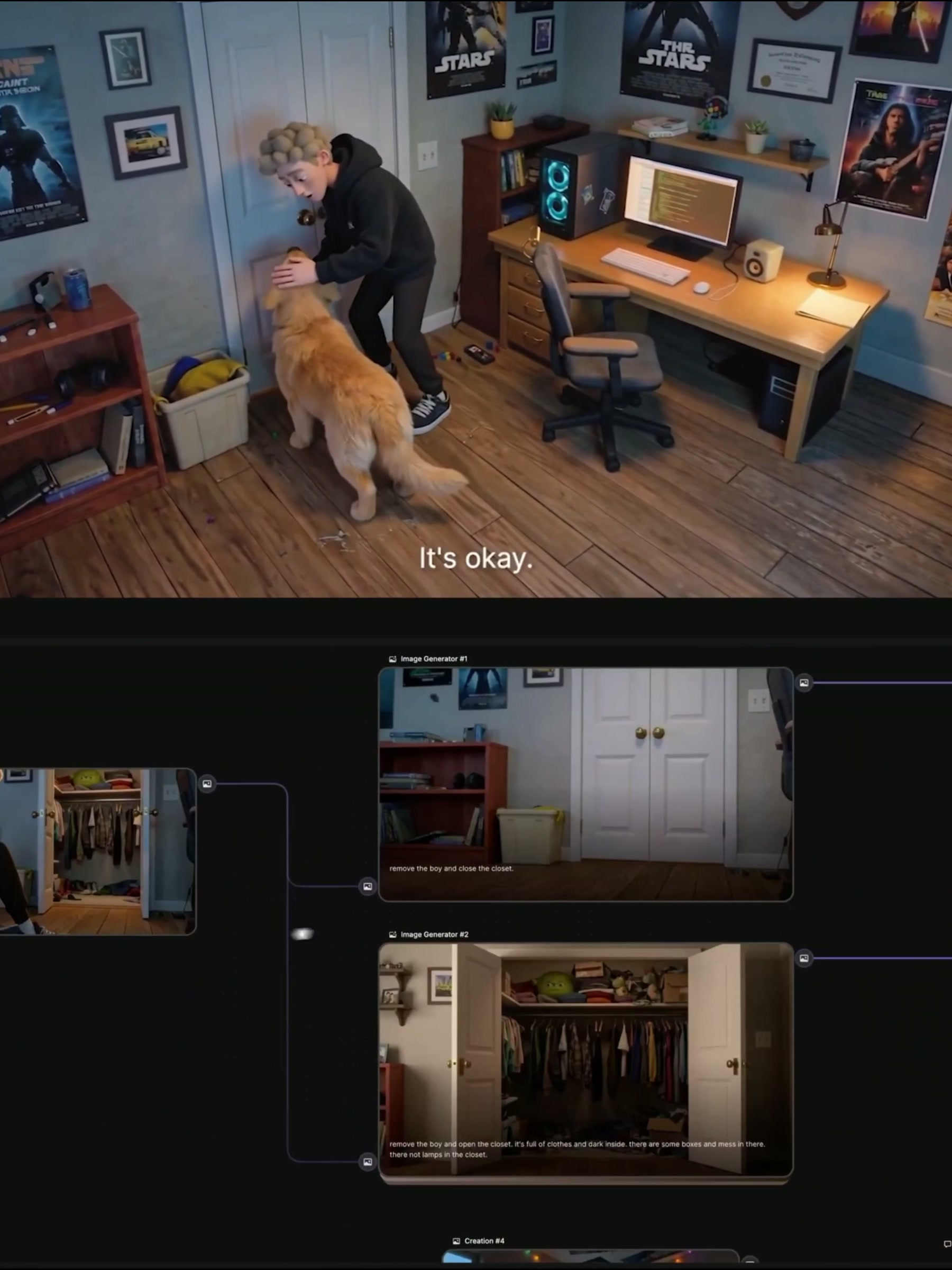
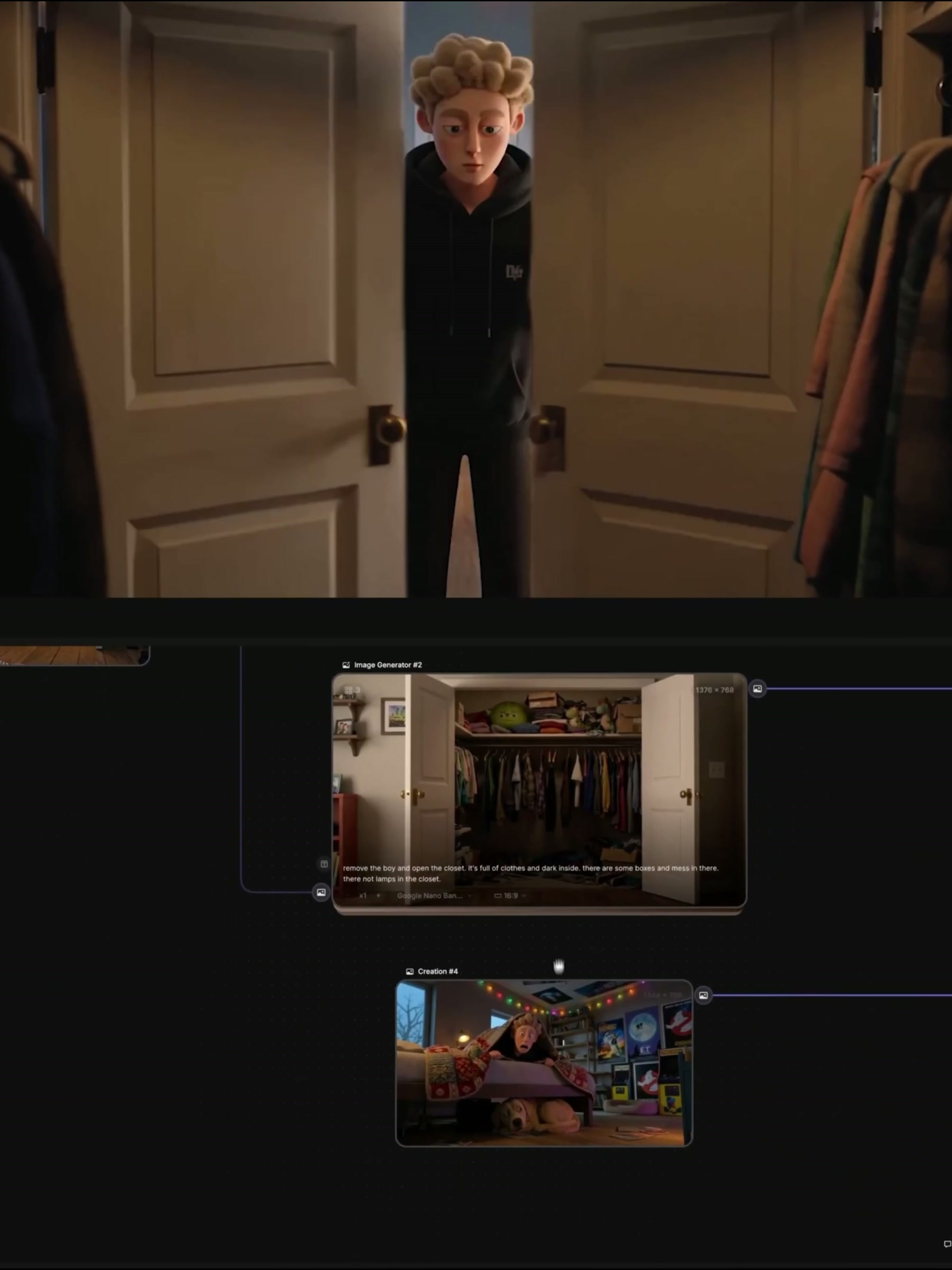
The wardrobe is the key prop in this story. If its number of doors, direction and internal structure change back and forth, the audience will immediately play. I didn't directly let the video node complete the series of actions of "character approaching, sliding door, showing interior and character reaction" at the same time, but first prepared the state diagrams of wardrobe closing, opening and empty wardrobe.
These images serve as visual landmarks for the lens. First confirm the spatial relationship, and then let the characters into the screen, the video generation needs to guess a lot less content. This method is also suitable for continuous actions such as door opening and closing, packaging and unpacking, product deformation, etc.
After the state diagram is confirmed, a dynamic shot of the teenager and the golden retriever walking towards the wardrobe is regenerated. During the inspection, I will focus on five things: the youth's face and clothing, the hair color and body shape of the golden retriever, the position of the wardrobe, the direction of the light, and the sight of the two characters. If one of them jumps obviously, go back to the corresponding node for repair instead of continuing to pile up the shots back.
5. In the third paragraph, only new plot variables are added.
In the third paragraph, the bedroom, the teenager and the golden retriever still follow the previous setting, only changing the way the suspense is advanced. First, the bedside and low-camera lenses are used to create pauses to make the audience think that the danger has passed. Then the green monster was added to the plot description and it was made clear that it appeared from the wardrobe.
The most common mistake here is to completely re‑describe the entire world just for a monster’s entrance. A more stable approach is to retain the original scene and character constraints, add only the "monster appearance" item, and control its color, material, position and action separately. The fewer the variables, the easier it is to maintain consistency between shots.
The final shot is not touched by a universal prompt, but the result of the joint action of the previous steps: role reference is responsible for identity, public description is responsible for world outlook, state diagram is responsible for space, and segment node is responsible for action. Each layer should focus on only one task, so the project won’t become increasingly chaotic as it progresses.
If you are also doing continuous plots, it is recommended not to increase the number of shots in a hurry. First, select three to five inspection items to run through the whole film, such as character appearance, prop position, light direction, line of sight relationship and action acceptance. When an issue is identified, return to the node responsible for that task and make the necessary modifications. What really stabilizes AI short film is not that enough is generated at one time, but that every change has a clear boundary.


The copyright of this work belongs to Aqun. No use is allowed without explicit permission from owner.

New user?Create an account
Log In Reset your password.
Account existed?Log In
Read and agree to the User Agreement Terms of Use.
Please enter your email to reset your password



100 points
Quite good, huh?