First fix the pattern, then change the model and version: Freepik AI clothing test
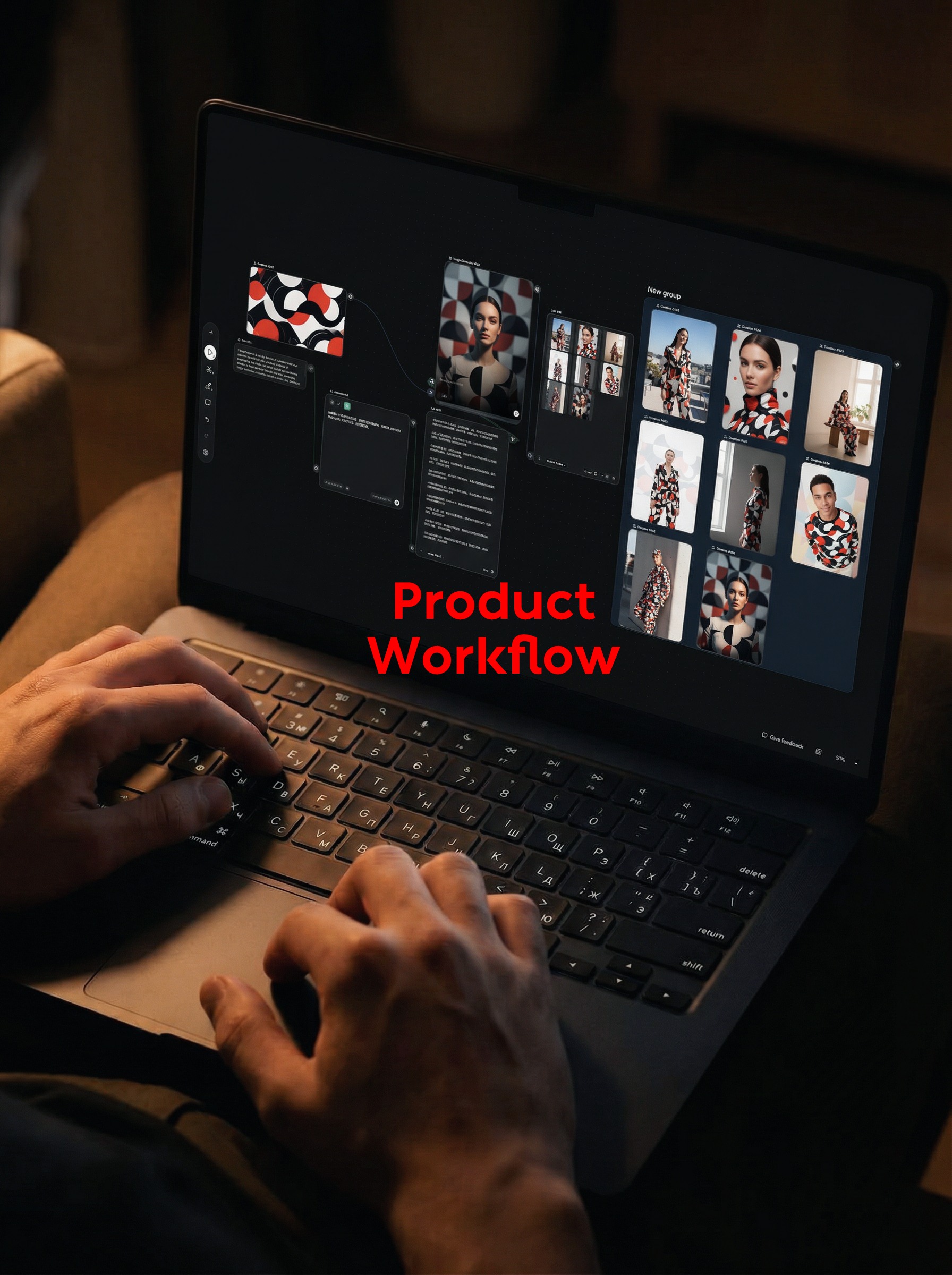
When making clothing patterns, the most difficult thing for me to judge is often not whether the plane draft looks good or not, but whether it will be too robbed, too broken, or eat the original structure of the clothes after wearing it on people. The cost of directly entering the proofing is too high, so I first took a red, black, and white abstract map and did a round of quick upper body tests in the Freepik AI.
1. first let the text just "who wears it and where to shoot it"
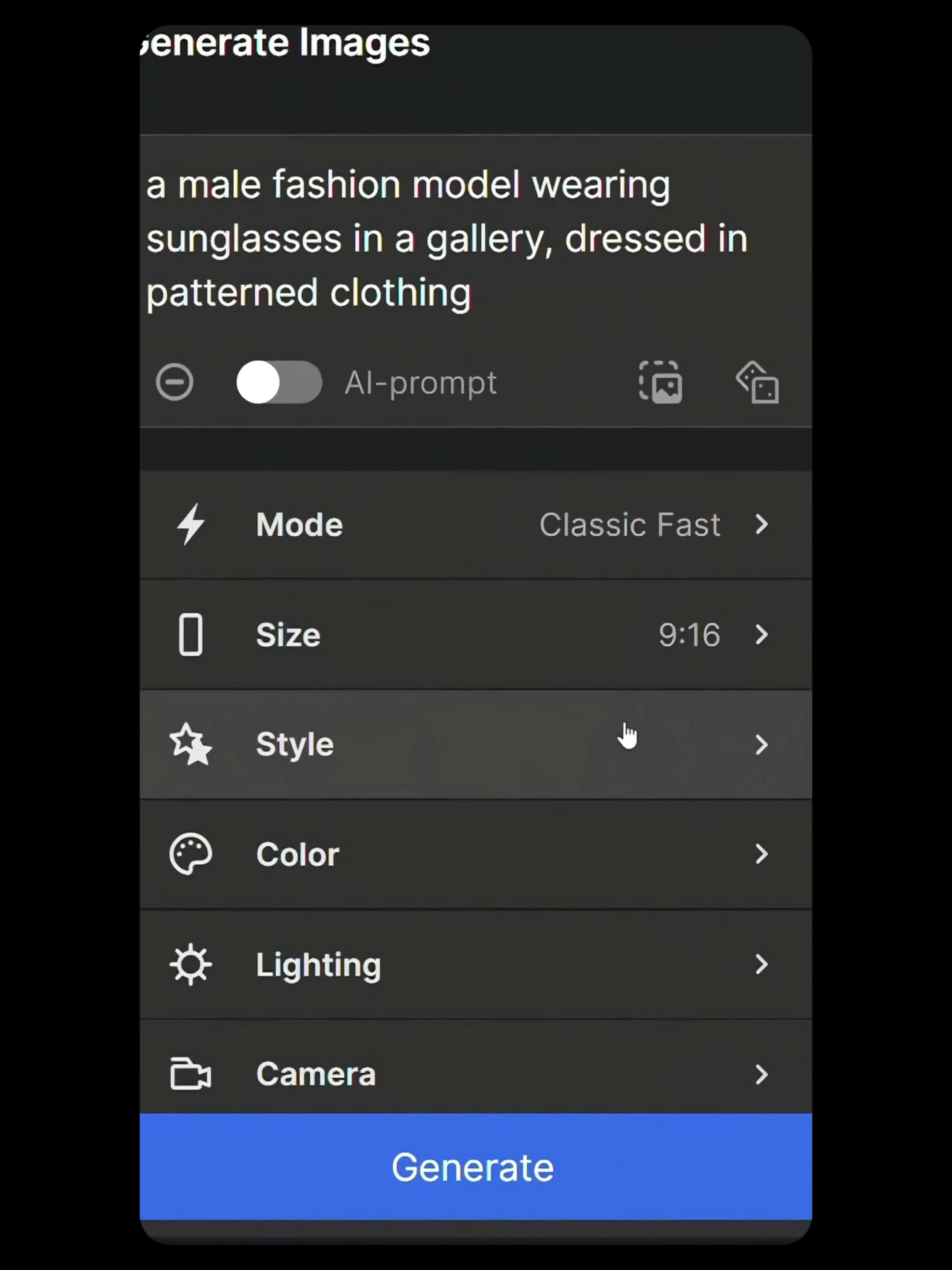
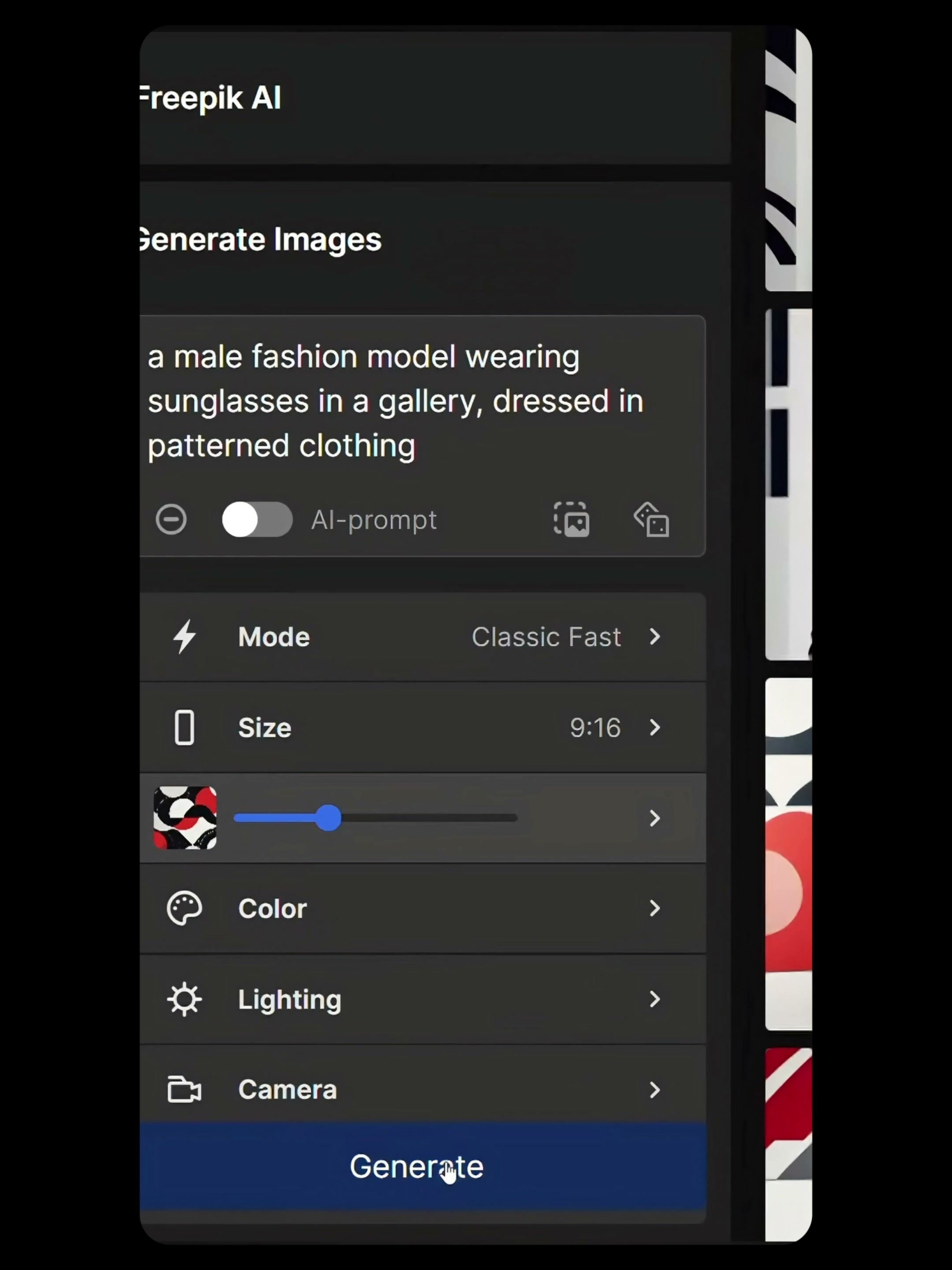
After entering the AI image generator in Tools, I first write characters and scenes: a male fashion model wearing sunglasses in a gallery, dressed in patterned clothing. Mode use Classic Fast, frame selection 9:16. A large paragraph of text is deliberately not used here to describe the pattern, because the characters, environment and patterns are mixed in the same sentence, and the model is easy to lose one and lose the other.
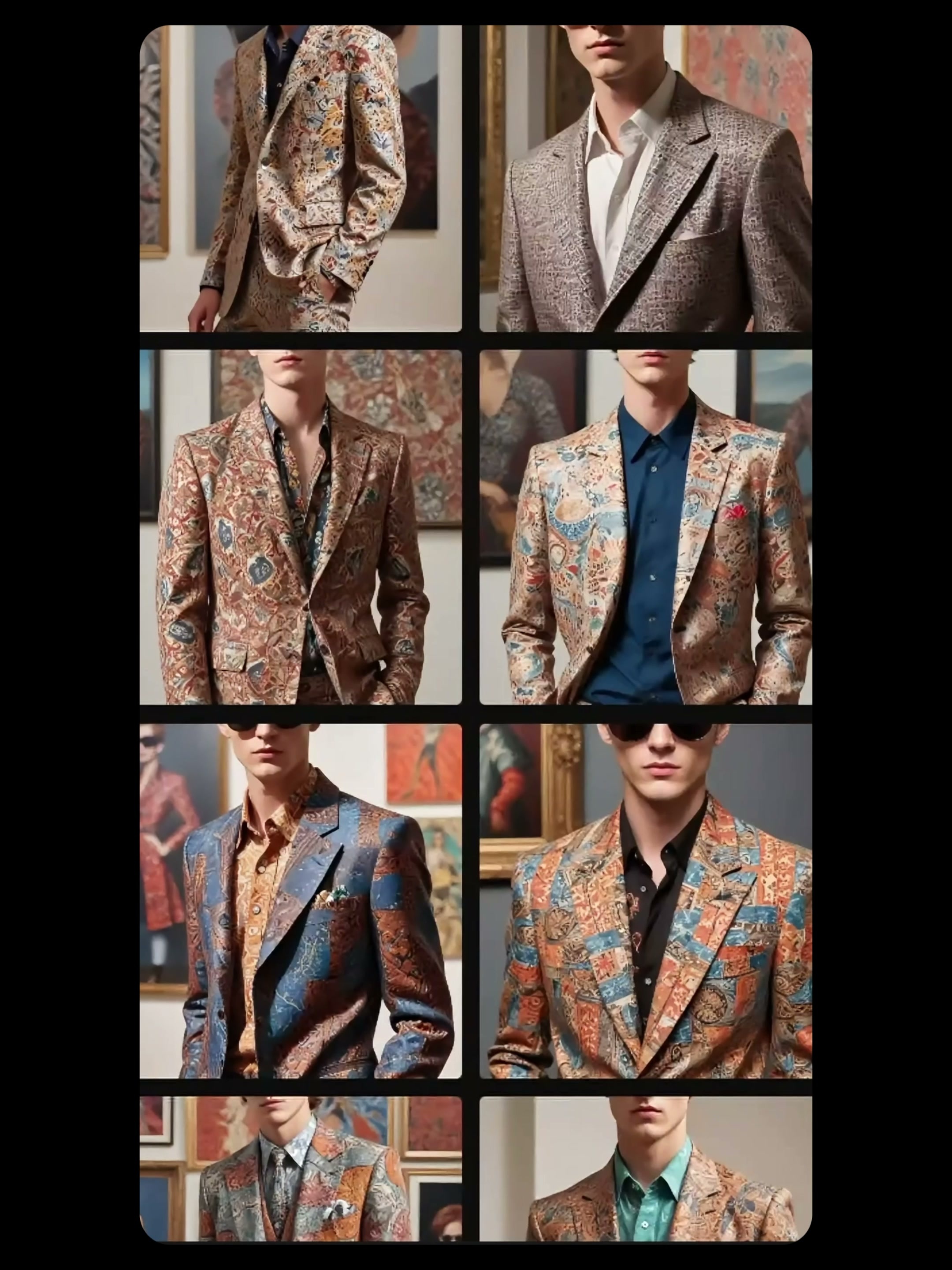
The first build is necessary to retain. When only writing "patterned clothing", the system gives paisley, broken flowers and other decorative patterns. The characters and gallery atmosphere are basically right, but the pattern direction is very random. This set of results is not a failure, it just shows that if there is no visual reference, "with pattern" is only a broad requirement, and the model will not automatically understand the design draft in my hand.
2. set pattern to Style reference
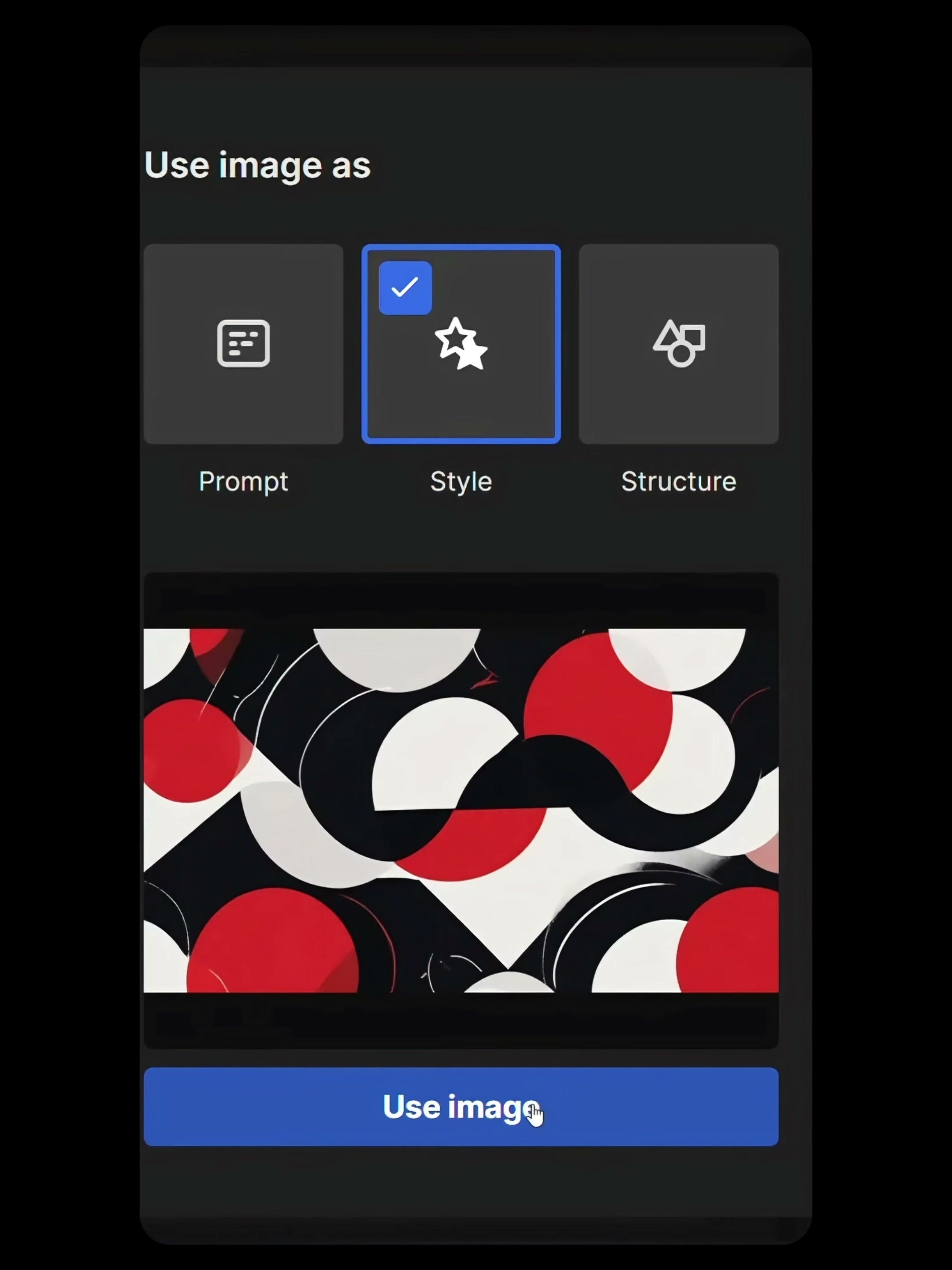
Next, click on the reference figure entry, select Style in Use image as, and upload red, black and white abstract patterns. I chose Style instead of Structure here because I want to borrow its color, curve and graphic rhythm, while allowing clothes, characters and composition to continue to be generated by the model. If the goal is to accurately copy the position of each pattern, this path is not appropriate.
After uploading, I did not directly fill up the reference strength, but reserved a part of the generation space first. If the intensity is too low, the pattern characteristics may not be obvious; if the intensity is too high, the background, characters and clothing will be covered by the same graphic language. A safer way is to try it from the middle range first, and then call back according to the two things of "does it look like the original picture" and "does the clothes look like clothes.
3. first see if the whole group forms the same language.
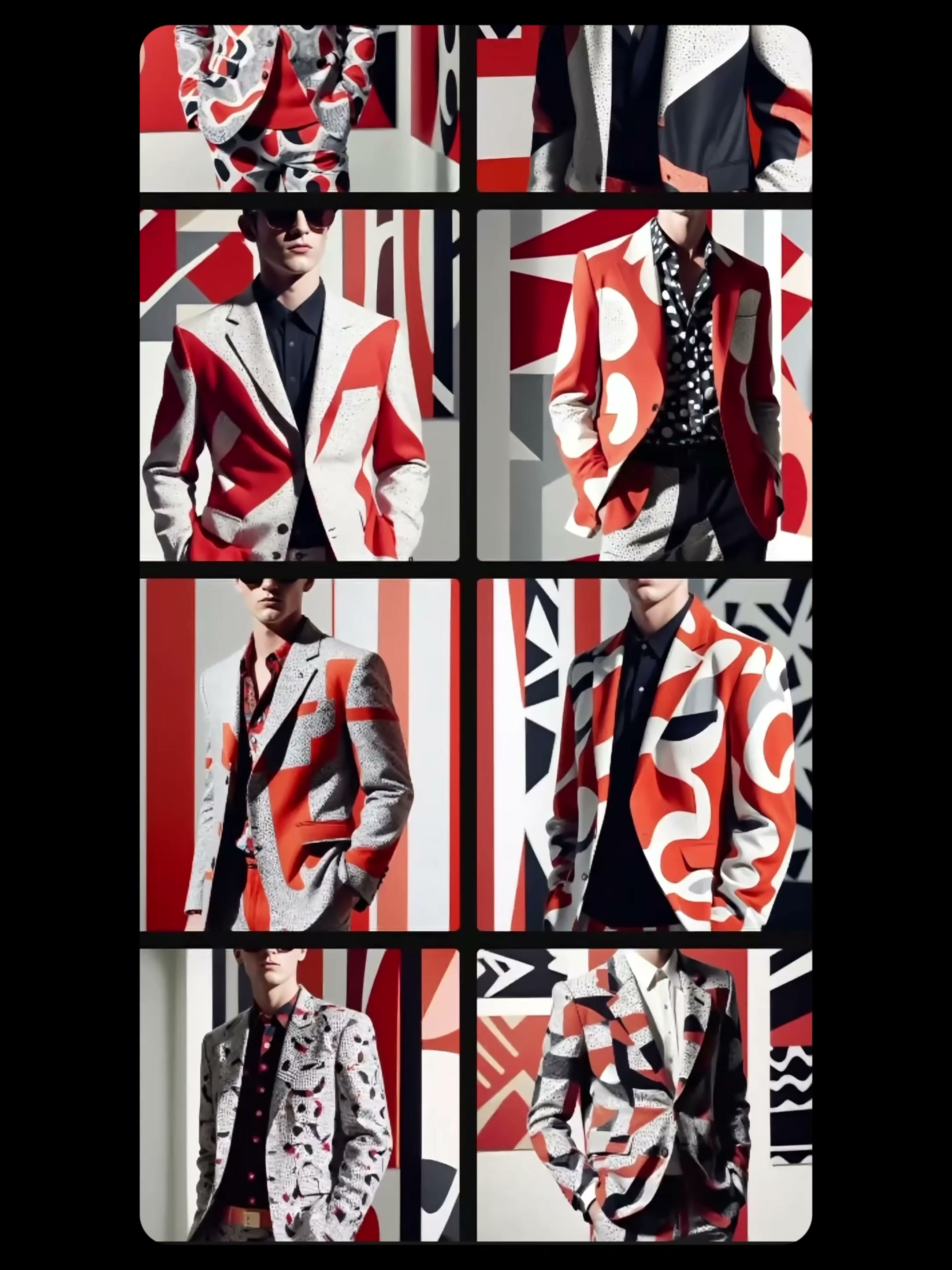
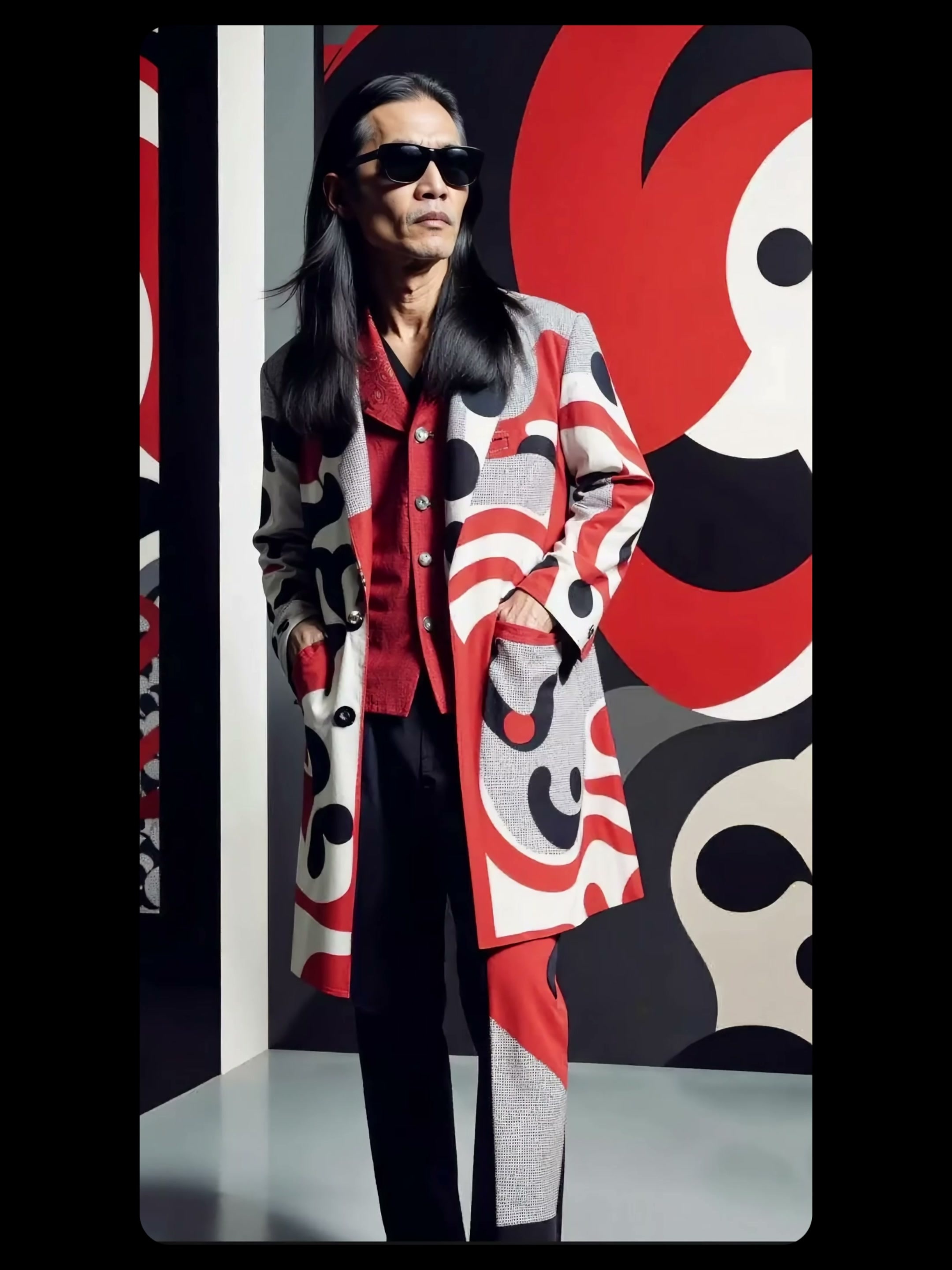
After regeneration, the change is very direct: the original brown and fine decorative patterns are replaced by large geometric curves of red, black and white, and the suits also have a more unified sense of series. However, the background also began to absorb the composition of the reference figure, which shows that Style affects more than just clothes. When a clean display is required, you can reduce the reference intensity or further limit the background in the prompt.
4. don't just look at a model.
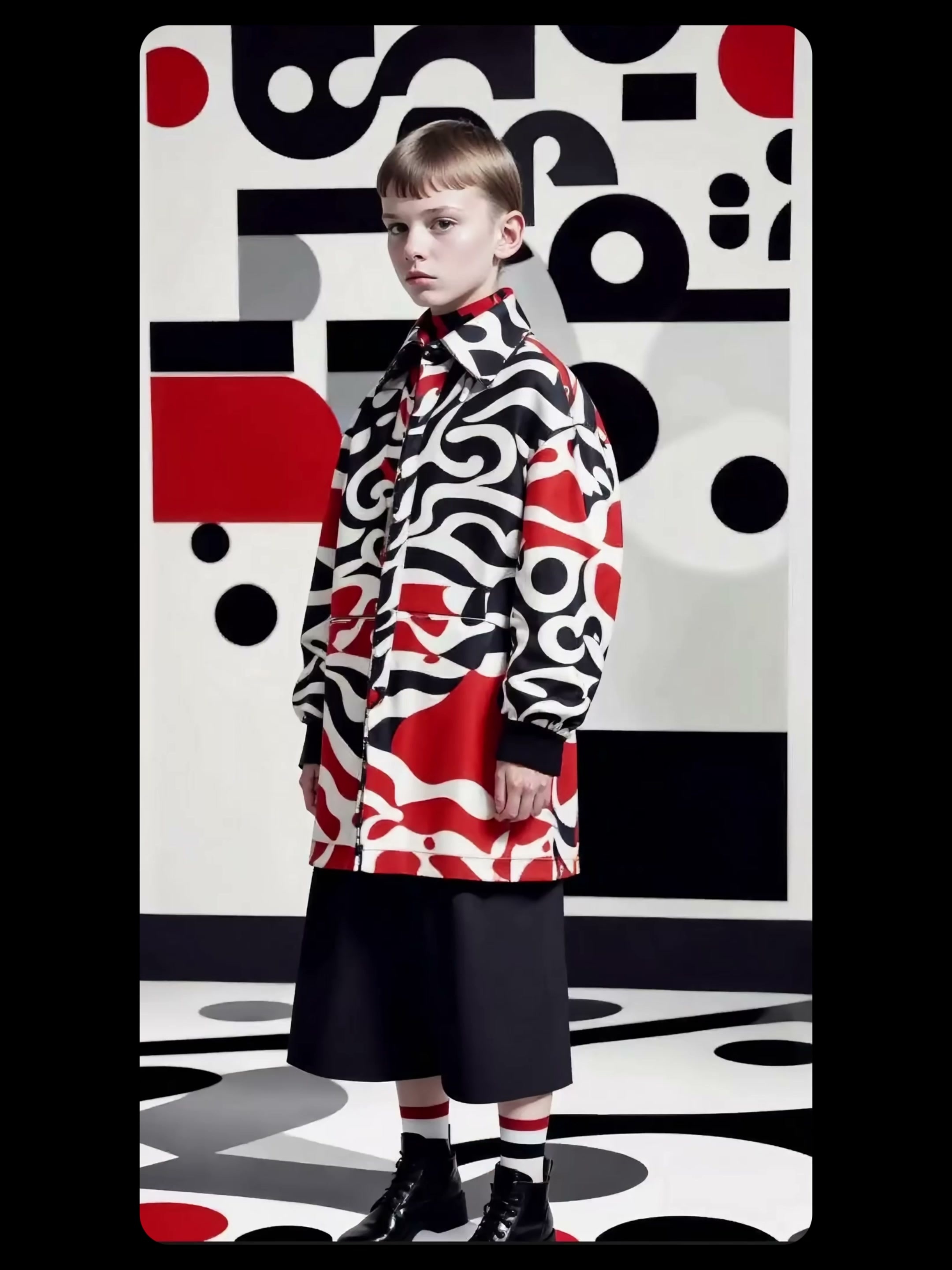
pattern can be used, can't just look at a most beautiful renderings. I will continue to put it in different ages, body types and clothing contours, and observe whether the pattern scale is stable. In the picture of children's long coat, the original arc is enlarged into a striking whole body figure, which has a strong visual impact, but it also exposes a problem: when the large pattern falls on the smaller body shape, it is easy to leave only parts, and the complete rhythm of the manuscript will be interrupted.
When it comes to mature women's clothing, the focus changes again. The long coat, the red inner tie and the black and white patterns are stacked together, and the layers are much more complicated than a single suit. At this time, I will check whether the neckline, waist line and trousers are competing with each other, and whether the pattern cuts the outline of the figure to pieces. It is suitable for finding matching directions, but it cannot replace real fabric positioning and cutting typography.
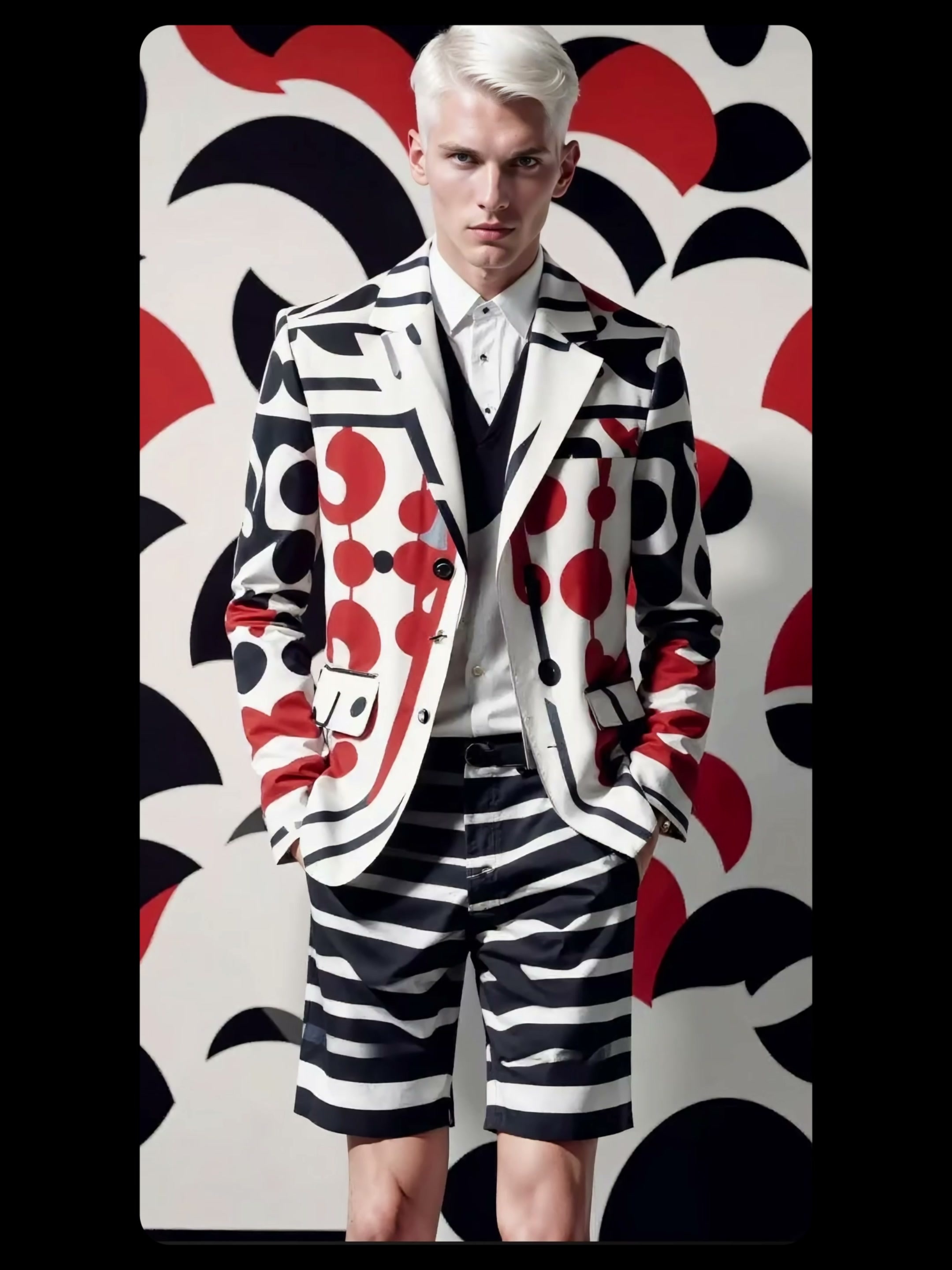
Men's suits are more suitable to see how the pattern connects between the top and the bottom. The red circles, black stripes and white undercolors are recombined in the picture, which is no longer a pixel-by-pixel copy of the original pattern. This difference needs to be accepted: the Style reference does visual translation. If it is to be produced later, it is still necessary to return to the repeatable pattern, the actual door width and the cutting position for redesign.
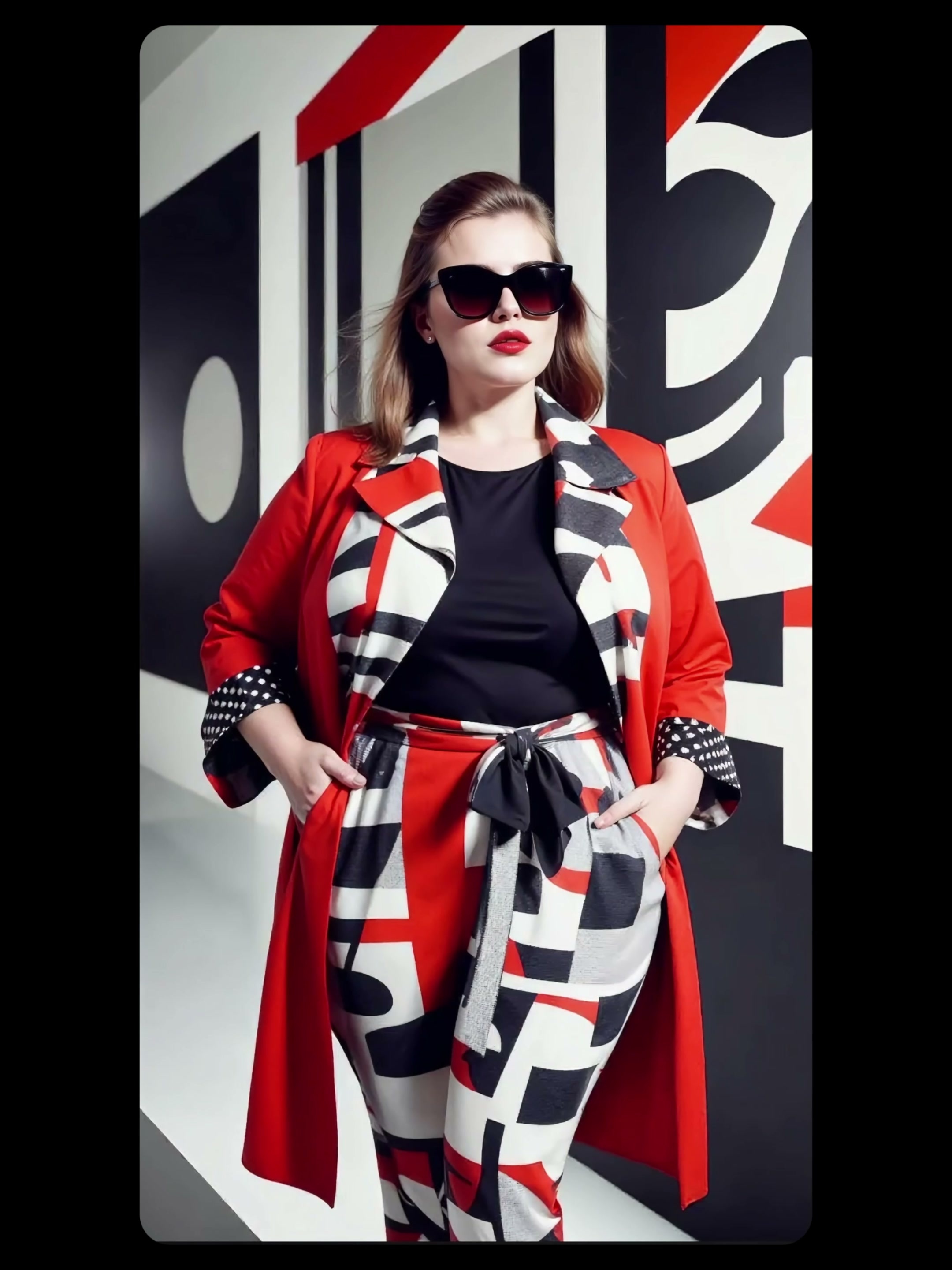
Different body types are also worth looking at separately. The pattern will stretch on a larger jacket and trousers, but the waistband, placket and trouser seams may cut large color blocks. When judging such results, I will not ask "whether the model looks good or not", but whether the pattern damages the clothing proportion in the shoulder, waist and hip positions, which is more useful than picking the most eye-catching picture.
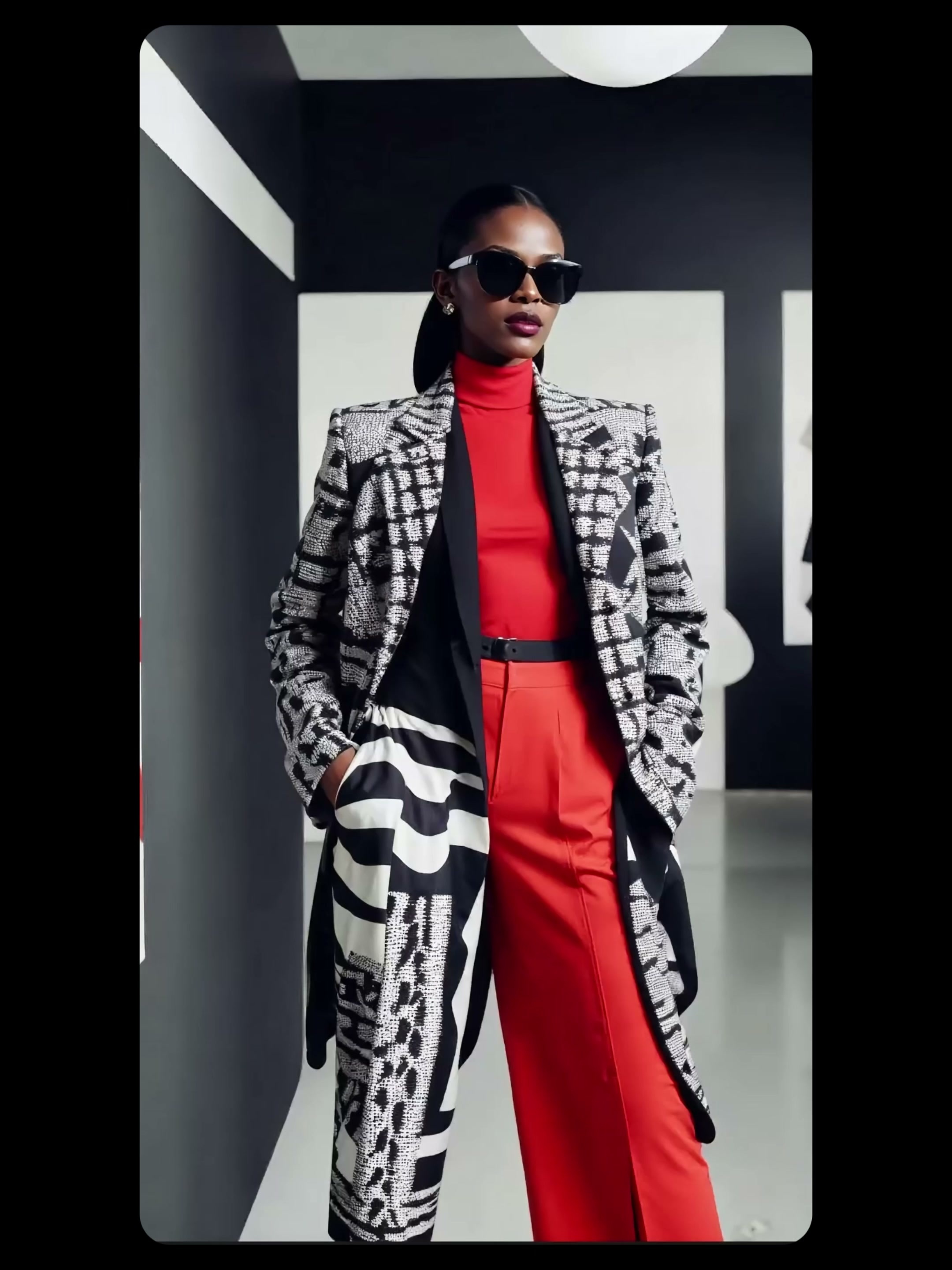
Finally, let's look at the long coat, which has a large longitudinal area. It can carry large graphics completely, and it is easier to see whether there is a lack of continuity between the left and right placket, sleeves and body. These positions in the AI map often just "look like continuity" and do not necessarily hold true when enlarged, so I will use it as a directional screening map rather than an effect confirmation map that is directly handed over to the supplier.
5. this method is suitable for where to use
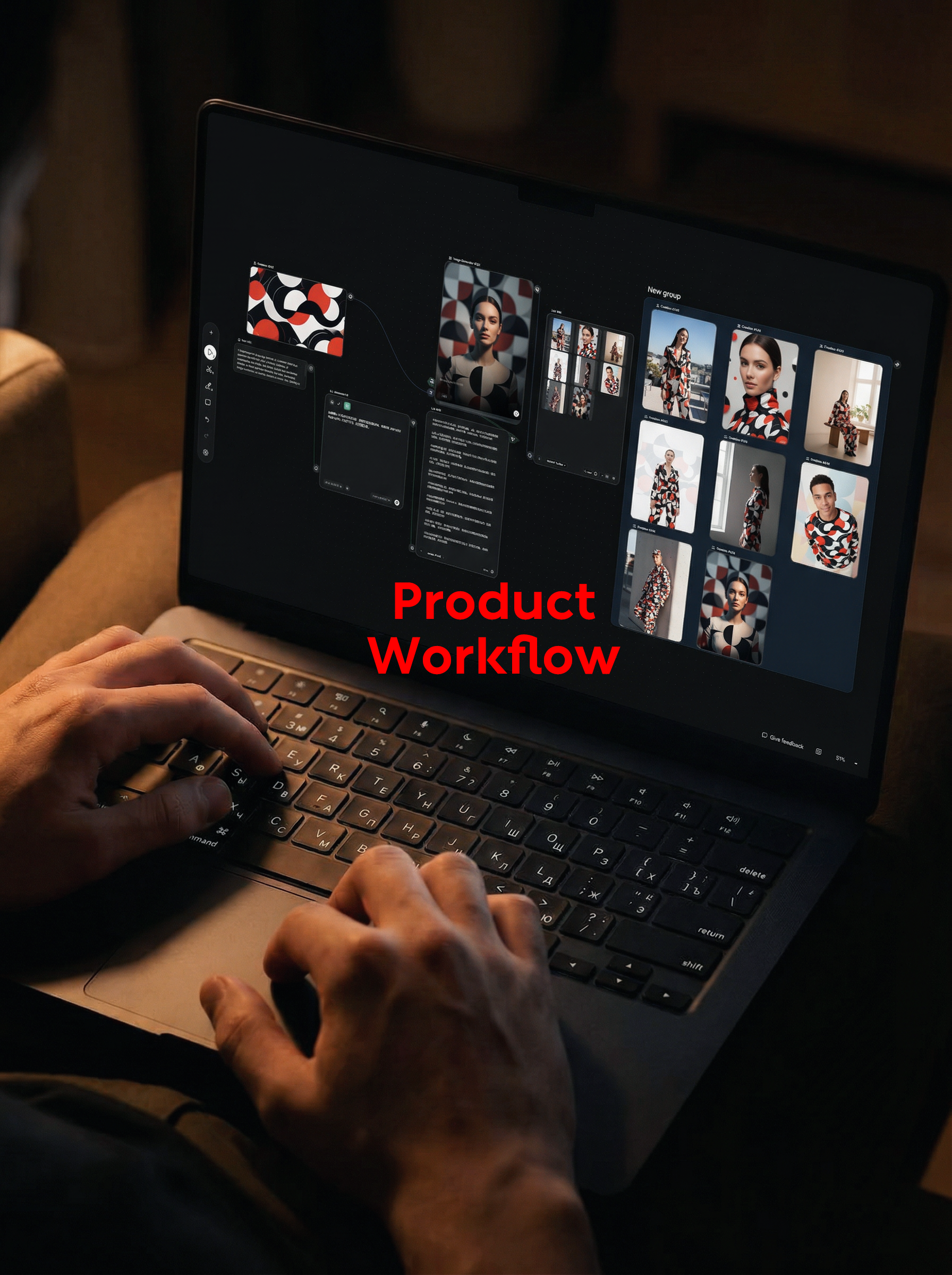
This process is most suitable for preliminary screening of flower pattern direction, series atmosphere exploration and upper body proportion rehearsal. First, use text to fix the characters and scenes, then use Style to refer to the fixed colors and graphic language, and finally change the characters, body type and version to make horizontal comparison. The generation process of more than ten seconds cannot replace clothing design and proofing, but it can help me find out the problems earlier: whether the pattern is too broken, whether the scale is out of control, whether the background is robbing the play, and whether the same set of visual language can hold up a series.
Before entering production, seamless circulation, color specification, fabric test, cutting piece positioning and sewing position inspection should be completed. The value of AI is judged in the early stage, and it makes some problems that can only be imagined into a debatable picture. After choosing the right direction, it will be more practical to spend time on structure, technology and details than to blindly generate a bunch of renderings.







The age of intelligence is coming.
AI helped a lot.