1. First, fix the narrator.
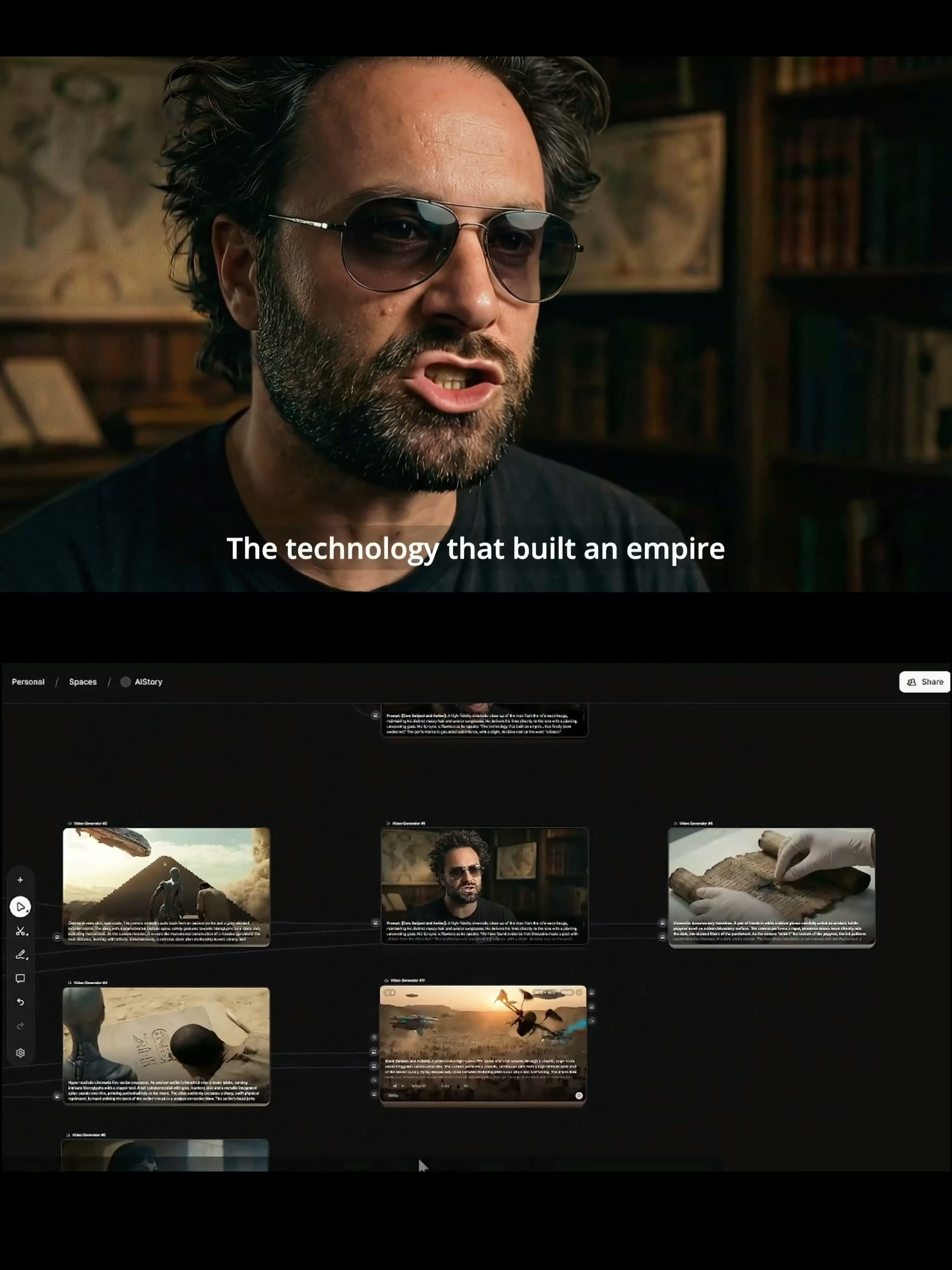
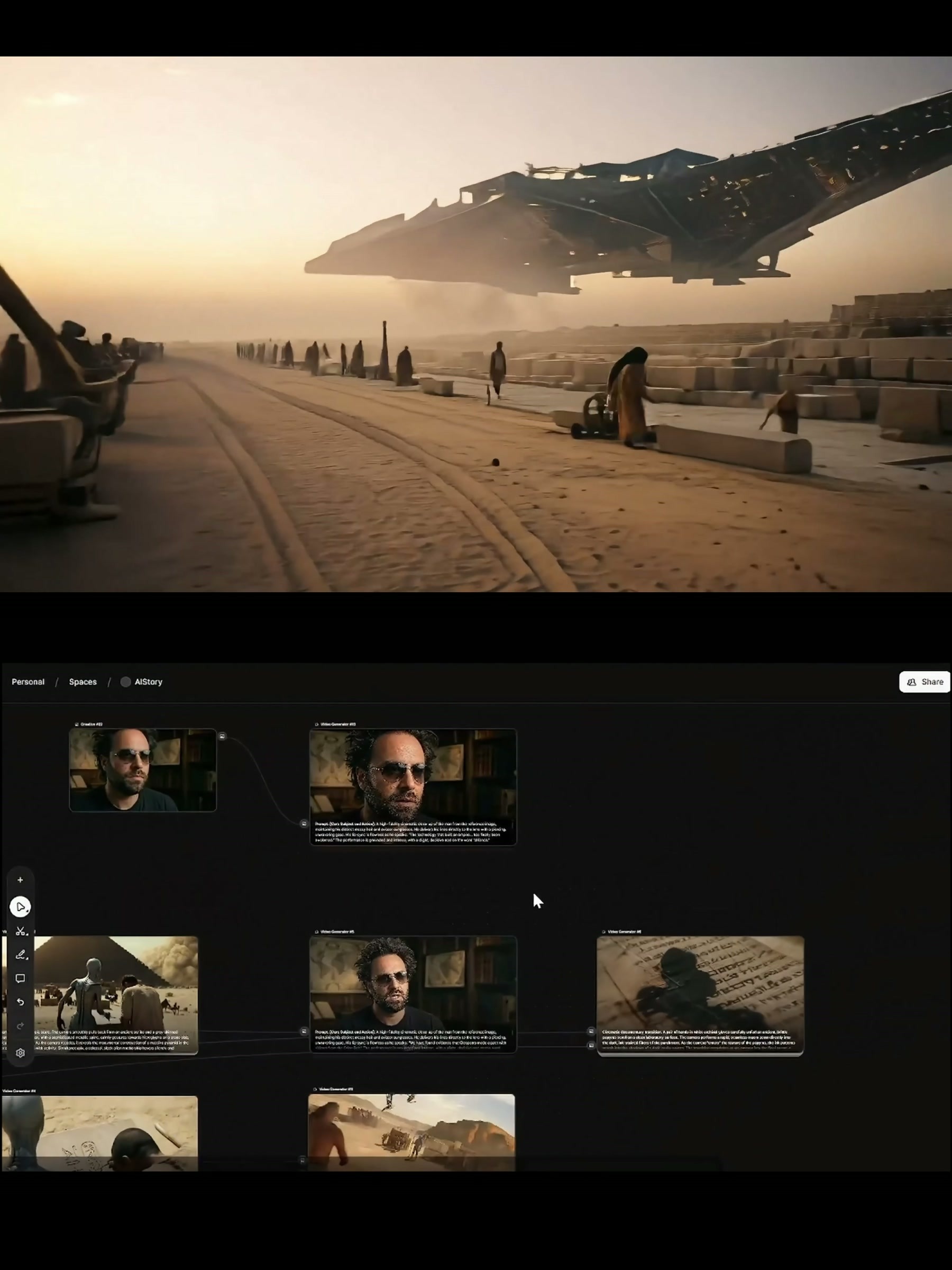
The narrator serves as the anchor of the entire short film. First, I standardized his appearance, attire, the study setting, and the camera angle, so that every time he appears in the frame, it feels like the same interview. This way, even as the eras, locations, and characters shift throughout, the audience still knows who is narrating and what point this particular segment is meant to illustrate.
The narrator was not written into a whole long line, but divided into several judgments that could be matched with separate pictures: abnormal evidence was found, Cleopatra contacted with visitors, technology was involved in the construction, and the pyramid was awakened. Each sentence should advance the narrative only once; later, match it with the corresponding shot.
2. First, lock down the fixed elements of the world view.
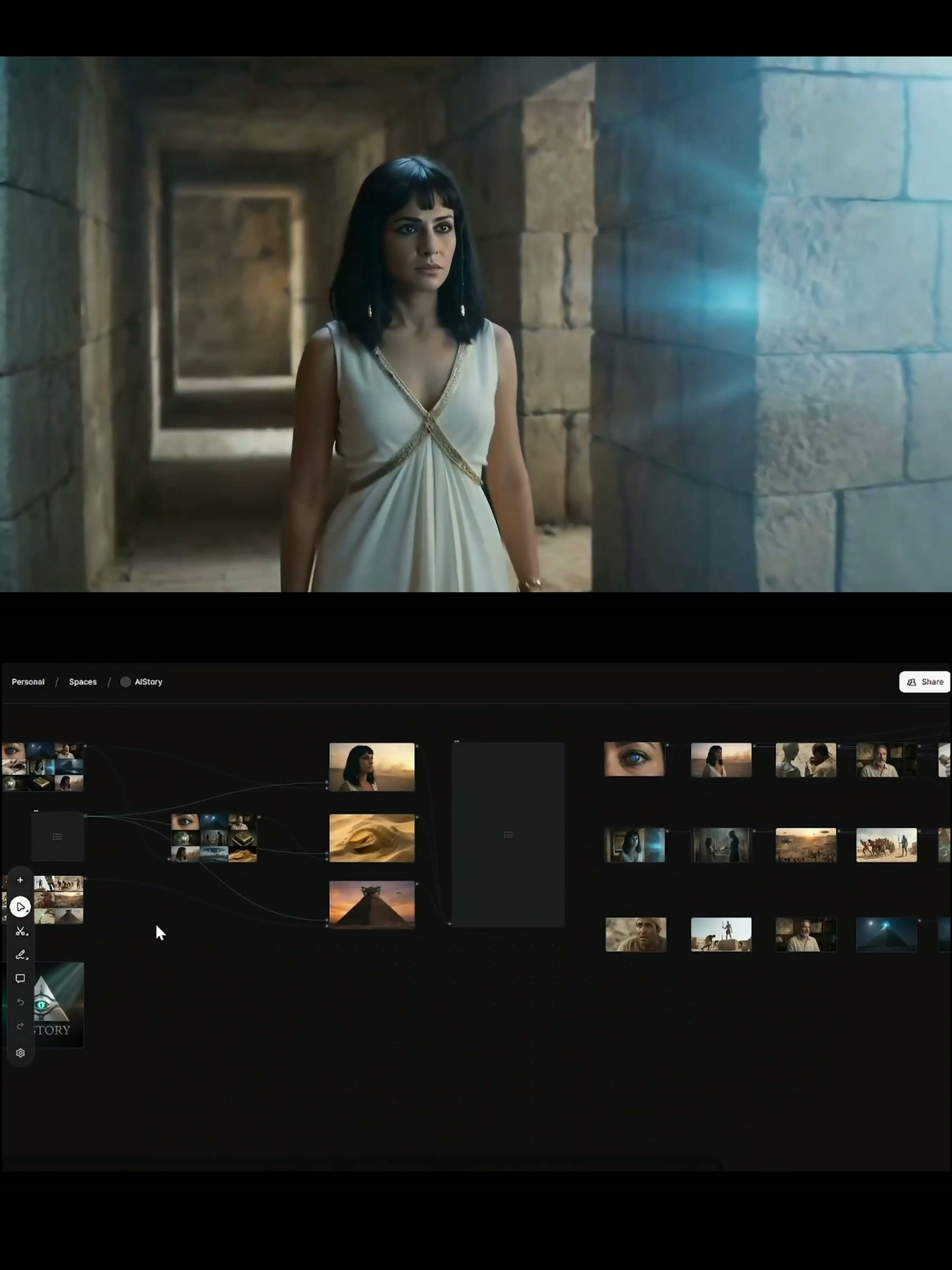
This kind of film is easy to become more and more scattered, so I did not pursue the number of shots from the beginning, but first determined several groups of visual anchor points that cannot be changed casually: Cleopatra keeps short black hair and long white skirt; "Visitor" Continues Metal Texture and Cold Blue Energy; Ancient Egyptian scenes are dominated by sand and warm light. The whole is composed of banners with a partial cinematic feeling.
What remains fixed are identity and visual conventions, while shot scale, action, location, and time can vary. After separating these two types of information, new scenarios will not easily turn a character into someone else, nor will they suddenly give the same civilization an entirely different art style.
3. Rewrite the abstract narration into an "evidence chain."
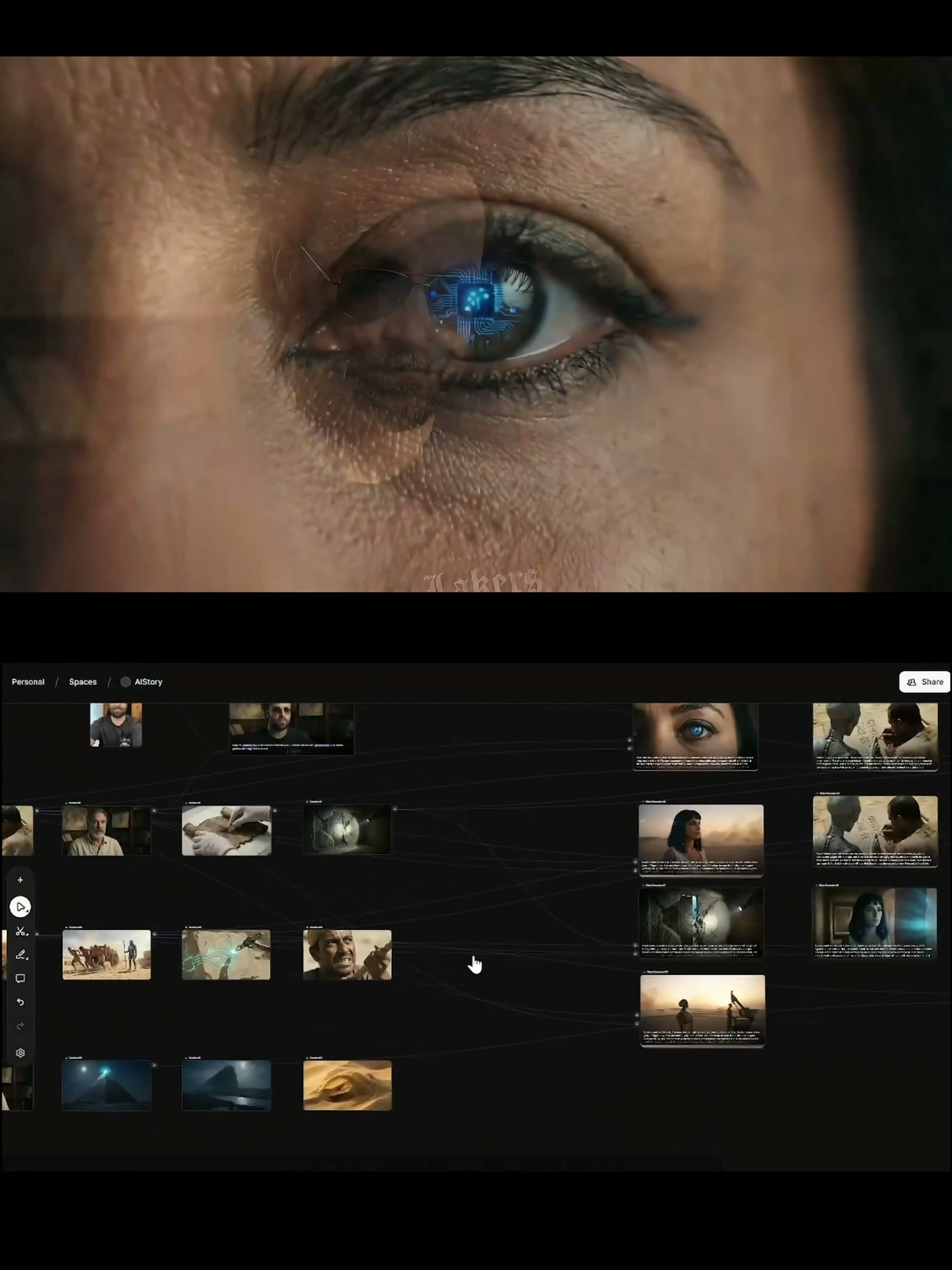
If the narration begins with sweeping, grand conclusions and the visuals immediately cut to a spaceship and an energy beam, the audience will quickly become desensitized. I would rather begin with details such as manuscripts, ink traces, caves, and eyes. These elements don’t directly reveal the truth, but they resemble the suspense-building material often used in documentaries, and they also allow the camera to breathe between sustained shots of the characters.
The key here is not to translate every sentence into a picture word for word, but to answer a question: if the interviewee has just said, "We have found traces of anomalies", what would the audience want to see most in the next second? Give local evidence first, then the relationship between the characters, and finally the larger event, the fictional setting will be much smoother.
4. Use shot size upgrades to drive information upgrades.
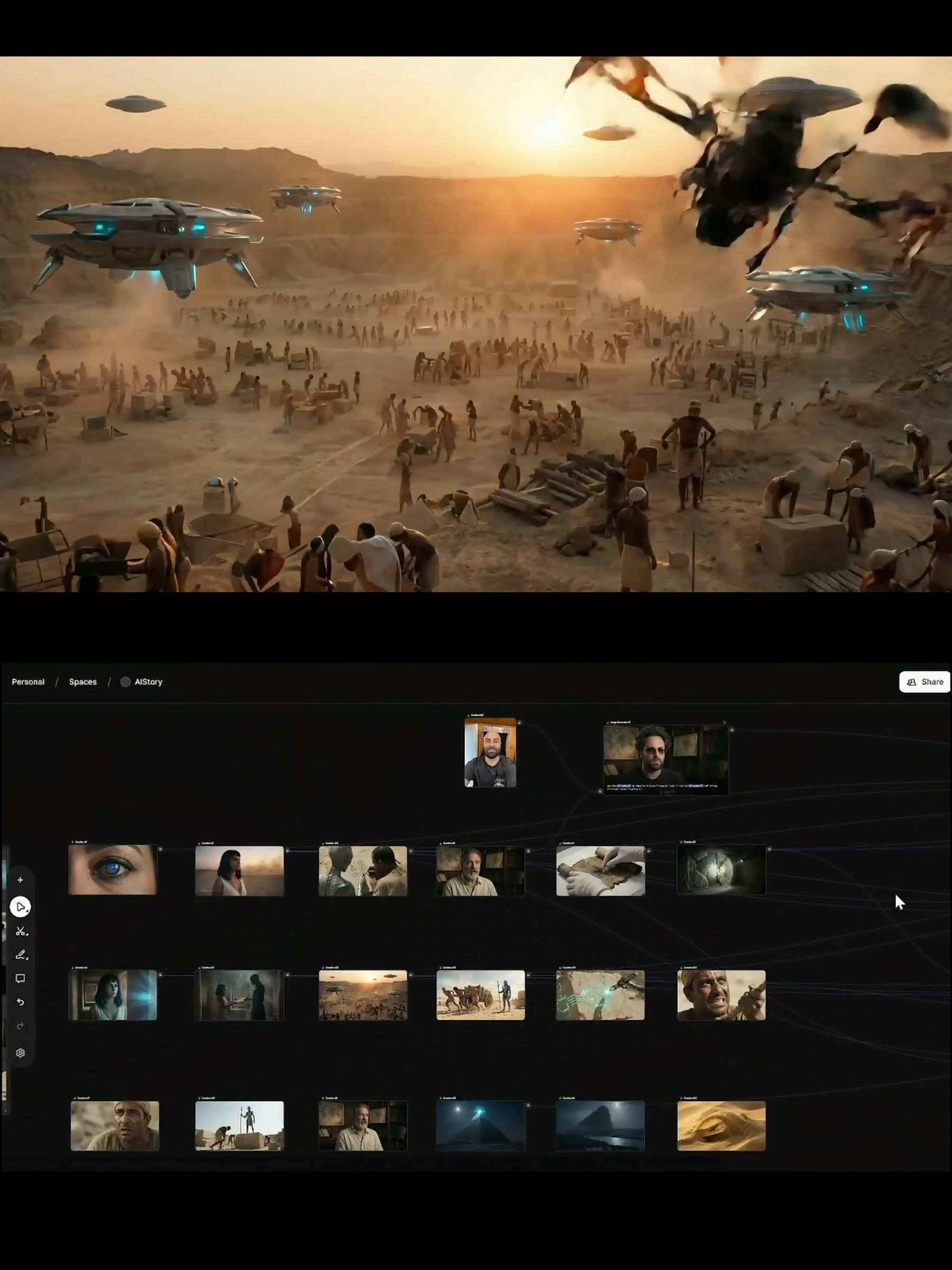
Once the close-up shots have established the question, it’s then appropriate to cut to a wider shot: the spacecraft appears above ancient Egypt, unfamiliar technology is brought onto the construction site, and the characters begin to interact within the same space. This sequence is more effective than immediately piling up spectacular visuals, because each scene transition answers the questions left open by the previous narration.
I gradually increase the scale of the scene in the order of “objects—characters—groups—environment.” This way, you can both control the pacing and easily check whether you’re still in the same world as before. Even when the shots come from different generative branches, the dust, warm lighting, costumes, and cool blue technological elements still tie them together into a unified visual narrative.
5. In interactive shots, the actions must be clearly explained.
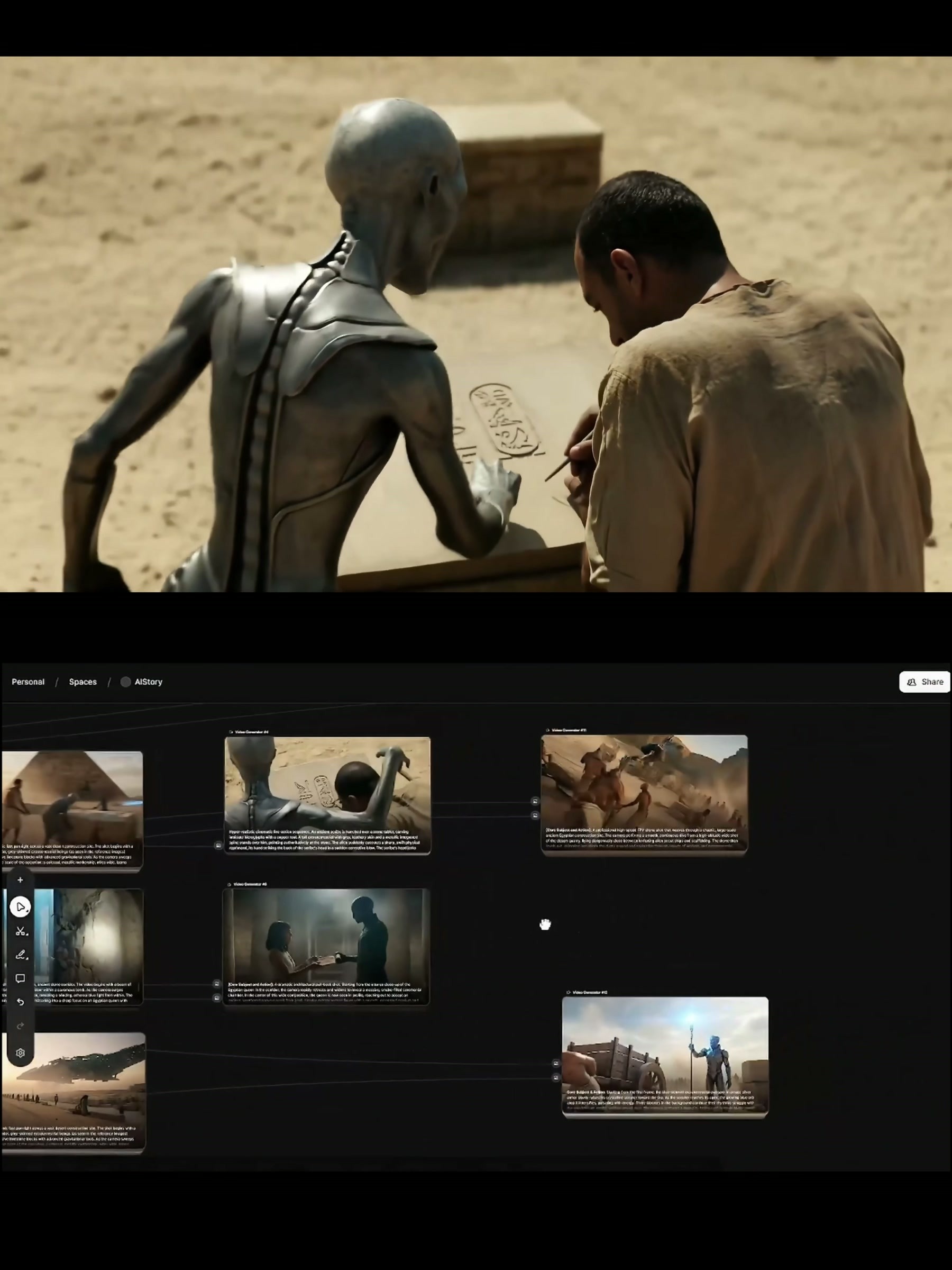
When two people are in the same frame, it’s not their expressions that are most likely to become uncontrolled—it’s their spatial and gestural relationships. Therefore, I will first write the action very simply: Cleopatra hands the scroll to the visitor; the visitor and the artisan face the same pattern; the characters’ gazes are fixed on the same object. By keeping only one primary action per shot, the resulting output is generally easier to understand.
Props here are not just for decoration either. The scroll, the carvings, and the tools in their hands connect the figures, enabling the viewer to understand why they are standing together. If the characters, gestures, props, and lines of sight are at odds with one another, even the most lavish setting can’t save the scene.
6. The group shot only undergoes one upgrade.
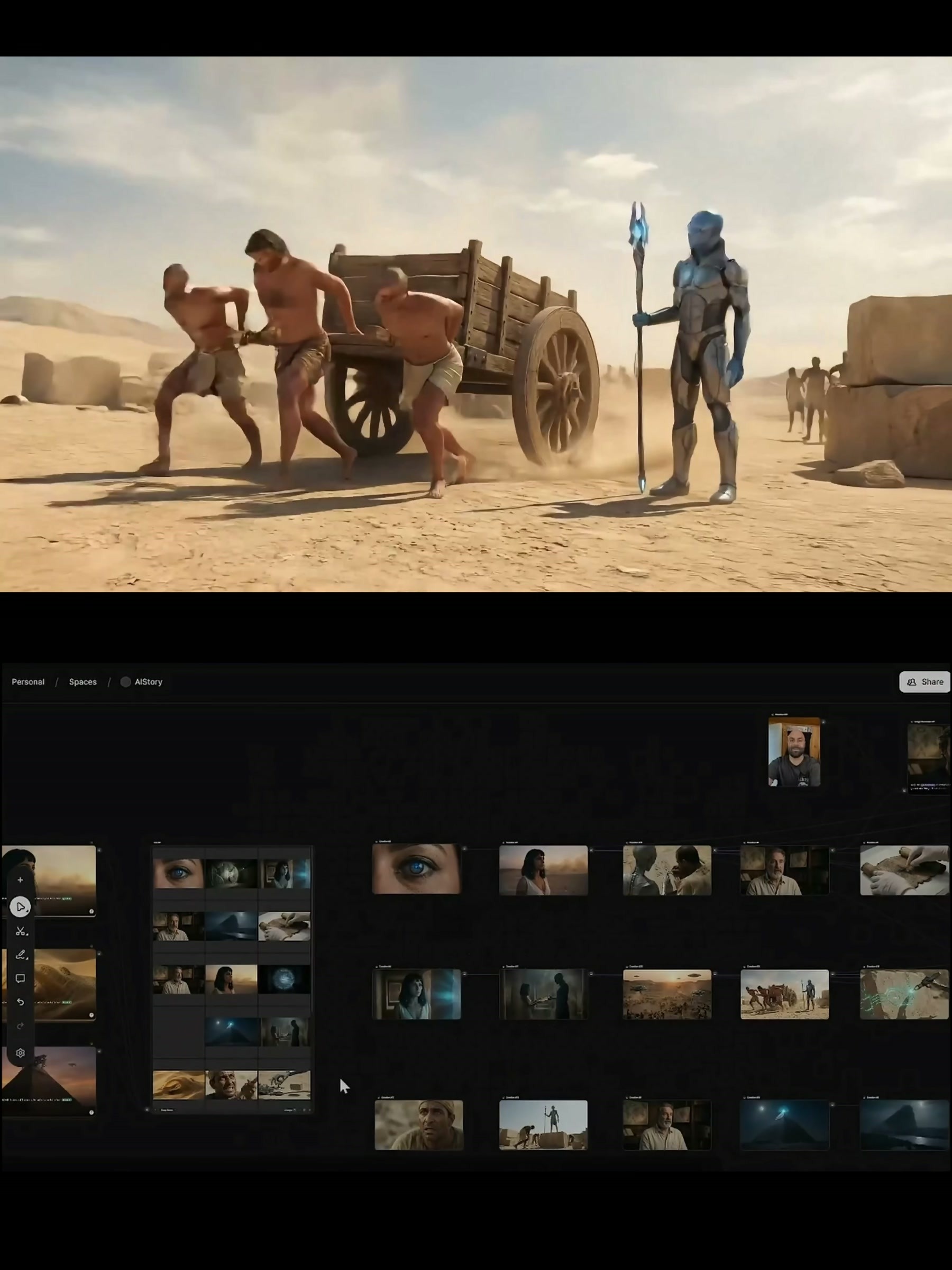
Only upon arriving at the construction site did I become part of the scene—surrounded by workers, vehicles, dust, and a broader, more expansive environment. The purpose of this shot is not to further elaborate on the details, but rather to convey to the audience that the technology mentioned earlier has already begun to impact larger-scale projects. The number of characters has increased, but the visual focus remains singular—the mysterious visitor is participating in and overseeing the transport.
The more complex the group composition, the more necessary it is to step back and check the characters’ proportions, movement directions, and lighting. If a character moves to the right in the previous shot and then suddenly reverses direction in the next shot without a clear spatial transition, the cut will feel jarring. Node branching allows me to repeatedly swap out a specific shot without having to overhaul the established voiceover structure.
7. Let the narration and situational shots alternate.
When editing, I don’t let the interviewee speak at length without interruption, nor do I allow scene shots to run on their own, detached from explanatory narration. The narrator provides the judgment, while the situational shots transform that judgment into a visual sequence; when the information becomes slightly more complex, the focus returns to the interviewee, allowing the audience to re-establish their narrative perspective.
This alternating approach also offers a practical advantage: if the generated output for a particular segment is unstable, you can simply replace the corresponding situational shot while keeping the narration’s main storyline intact. On the other hand, if you start by committing the entire story to a single continuous long take, any mistake—whether in a character’s performance or an action—could jeopardize the whole sequence.
8. Save the best for last.
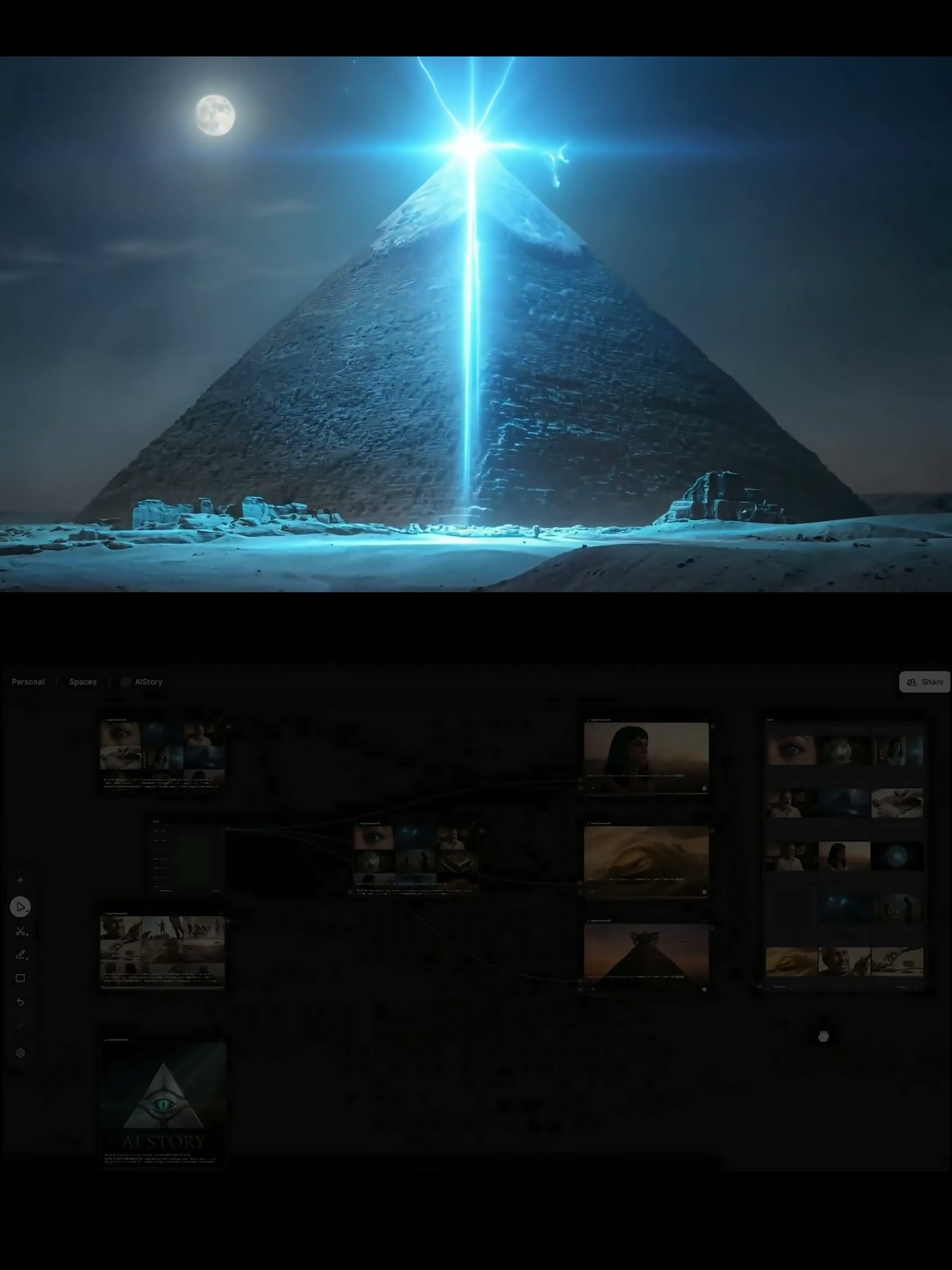
The pyramids bathed in moonlight and the cold blue energy beams only appear at the end of the film. It both echoes the narrator’s mention of “awakening” and carries forward the blue motif that appeared earlier, linking it to the eyes and the visitor. The ending doesn’t abruptly switch to an even more exaggerated spectacle; instead, it amplifies the visual elements that have already appeared to their fullest extent.
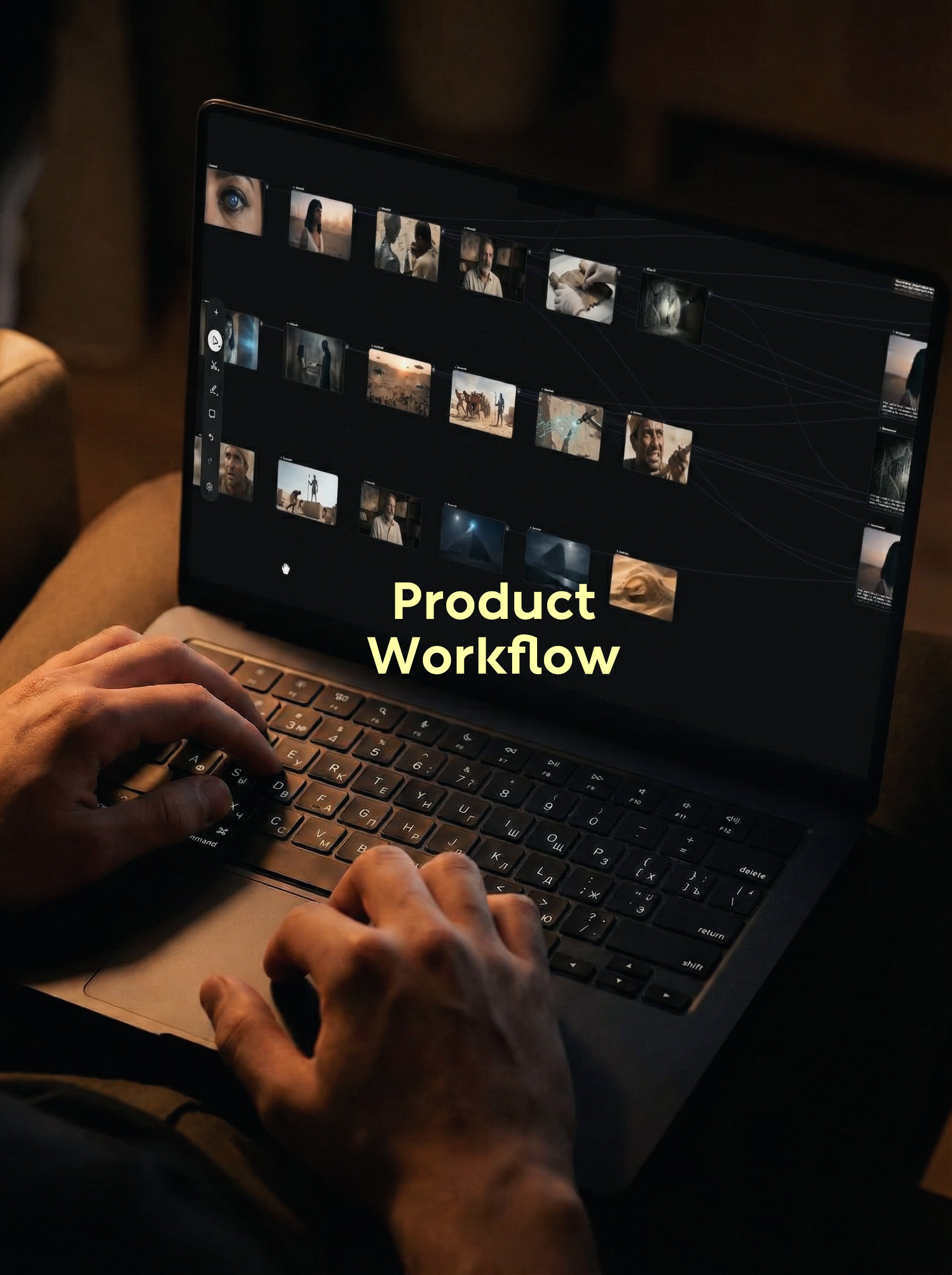
Looking back, the core of this set of methods is not batch generation, but management story logic: who is telling, which words need what evidence, which elements must be consistent, which lens is responsible for upgrading. The node canvas provides a replaceable and traceable structure. Whether it is finally coherent or not still depends on people to check the identity of the characters, costumes, props, light, direction of movement, and whether the narration and the lens really correspond.







Comment Board (0)
Empty comment